Classification: UNRESTRICTED//REL PUBLIC
Bottom-Line Up Front (BLUF): Today’s key developments highlight a pivotal U.S.-Ukraine summit amid escalating Russian attacks on Kyiv, severe winter storms disrupting U.S. holiday travel and causing fatalities, persistent high-intensity conflicts in Ukraine and Gaza with humanitarian crises deepening, mixed U.S. economic signals under the Trump administration, rising cybersecurity and homeland threats from nation-states and insiders, noted defense vulnerabilities in China’s rapid military buildup, and strengthening China-Russia ties countering U.S. influence.

(China-Russia strategic partnership illustration; Source: Council on Foreign Relations, 2025)
- Subject: Extreme Weather Events and Impacts
Summary:
Severe winter storms and flooding have struck parts of the United States, particularly California and the Northeast, causing fatalities, evacuations, and widespread disruptions during the post-holiday period. Atmospheric rivers and blizzards have led to catastrophic conditions, with ongoing risks of mudslides, heavy snow, and ice affecting travel and infrastructure.
Findings:
Reports confirm multiple deaths in California from Christmas flooding, with evacuations in Southern California and heavy snowfall in the Northeast disrupting air travel and roads. Blizzards are forecasted for the Upper Midwest and Great Lakes, while earlier tornadoes and cold waves marked unusual December patterns. These events align with broader 2025 trends of intensified hydroclimate whiplash attributed to climate change, exacerbating seasonal extremes across regions.
Why It Matters:
Such weather disruptions not only strain emergency response and critical infrastructure but also highlight vulnerabilities in supply chains, energy grids, and public safety during peak travel seasons. Prolonged patterns could amplify economic losses, displace communities, and challenge federal and local resilience planning, underscoring the need for adaptive strategies in an era of increasingly unpredictable climate impacts that affect national security and daily life.
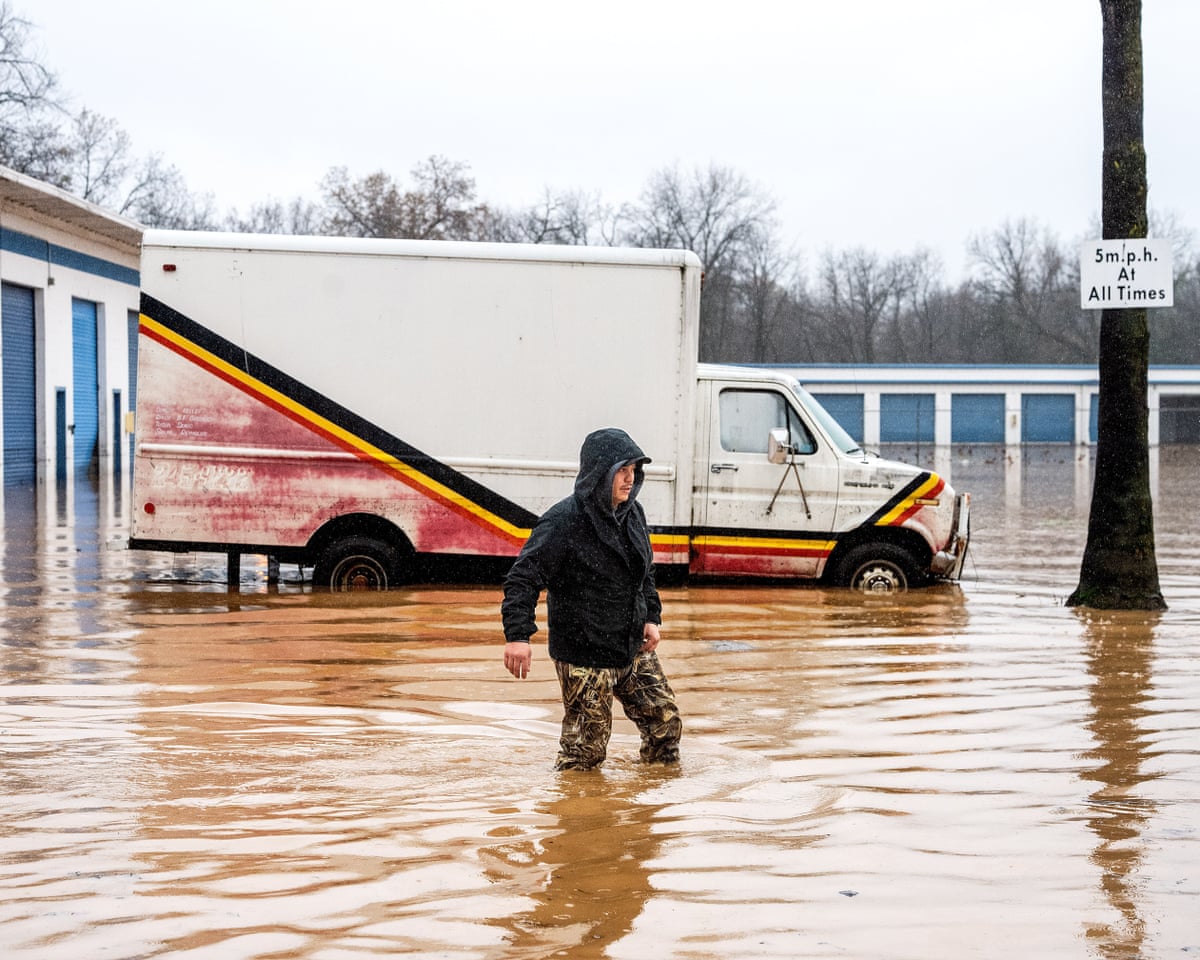
(Flooding in California; Source: The Guardian, 2025)
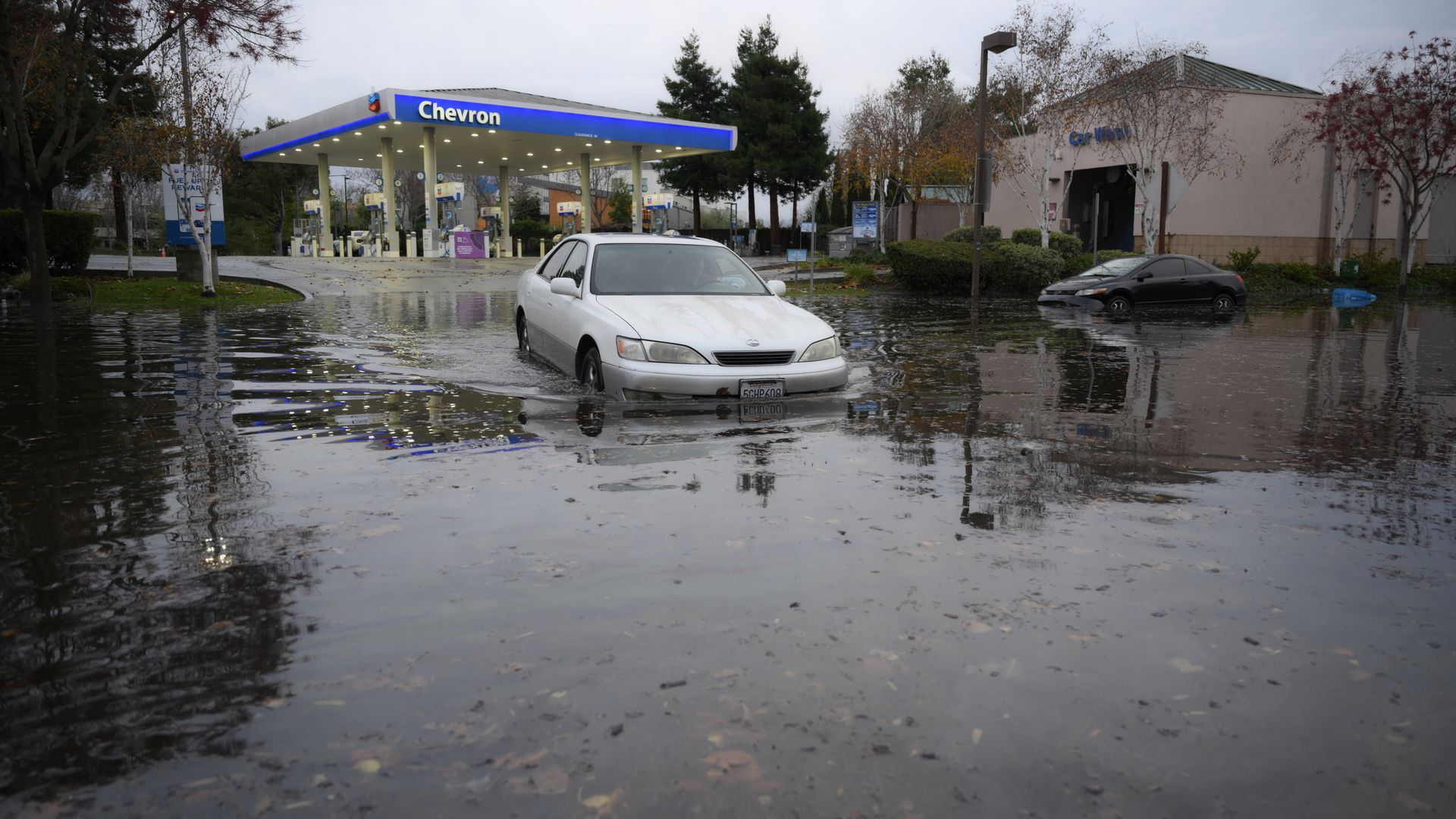
(Southern California storm impacts; Source: Axios, 2025)
- Subject: Global Intensity Conflicts
Summary:
Ongoing high-intensity warfare persists in Ukraine with Russian missile and drone strikes on Kyiv causing casualties ahead of U.S.-Ukraine talks, while conflicts in Gaza, Sudan, Myanmar, and Yemen continue to drive global violence levels, resulting in massive displacement and humanitarian crises.
Findings:
Russia launched attacks on Ukrainian infrastructure, killing and wounding civilians in Kyiv just before Zelenskiy’s meeting with Trump. In Gaza, humanitarian conditions remain catastrophic with malnutrition deaths and restricted aid. Sudan and Myanmar see protracted civil wars with high fatalities, and Yemen faces sporadic Houthi actions. Overall, 2025 has seen over 240,000 conflict-related deaths, with Ukraine and Palestine contributing significantly.
Why It Matters:
These entrenched conflicts not only prolong human suffering and regional instability but also strain global resources, fuel migration pressures, and risk broader escalation involving major powers. Persistent violence undermines diplomatic efforts and highlights the challenges of achieving ceasefires, potentially drawing in U.S. commitments and affecting international security architectures in profound ways.
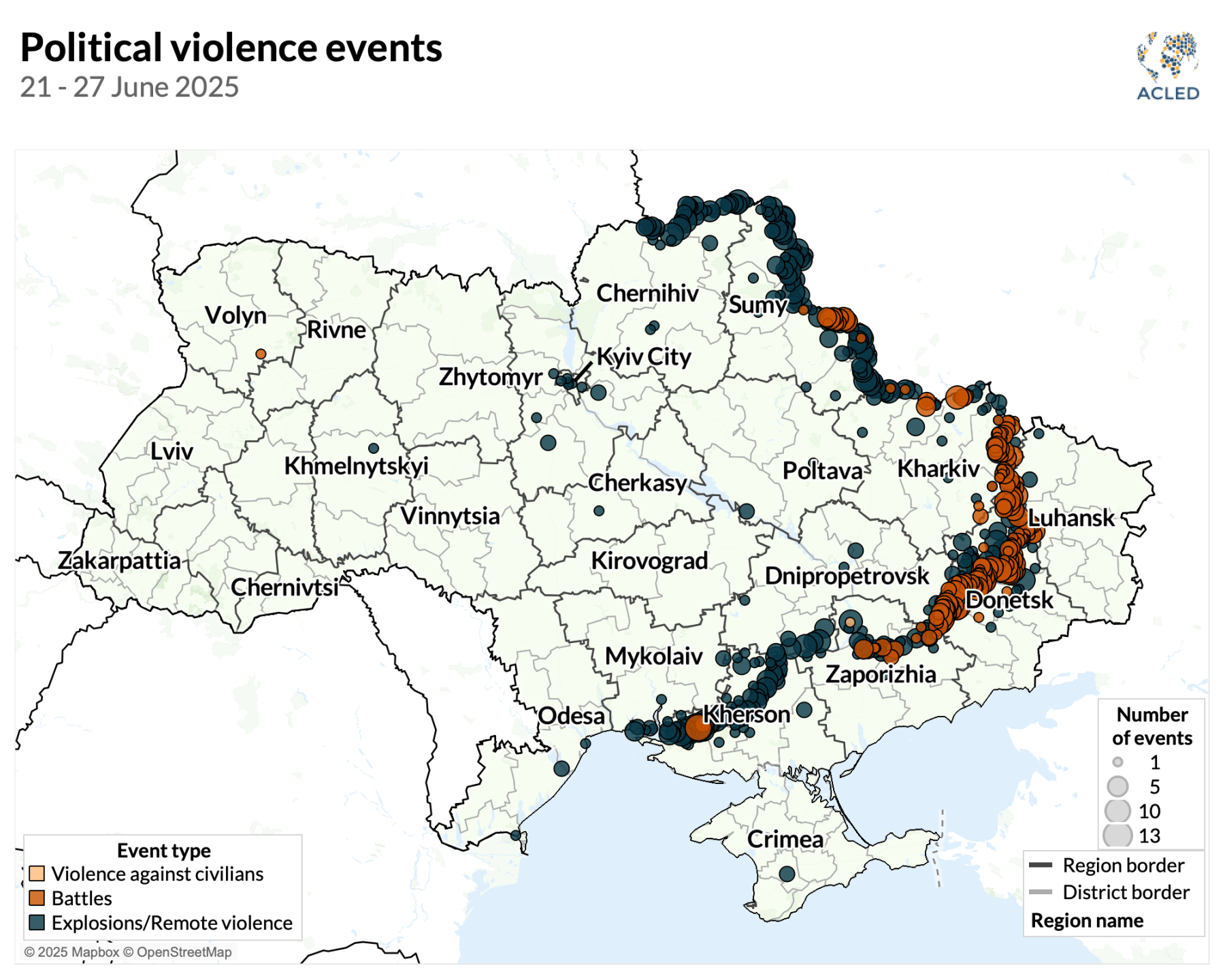
(Ukraine conflict map update; Source: ACLED, 2025)
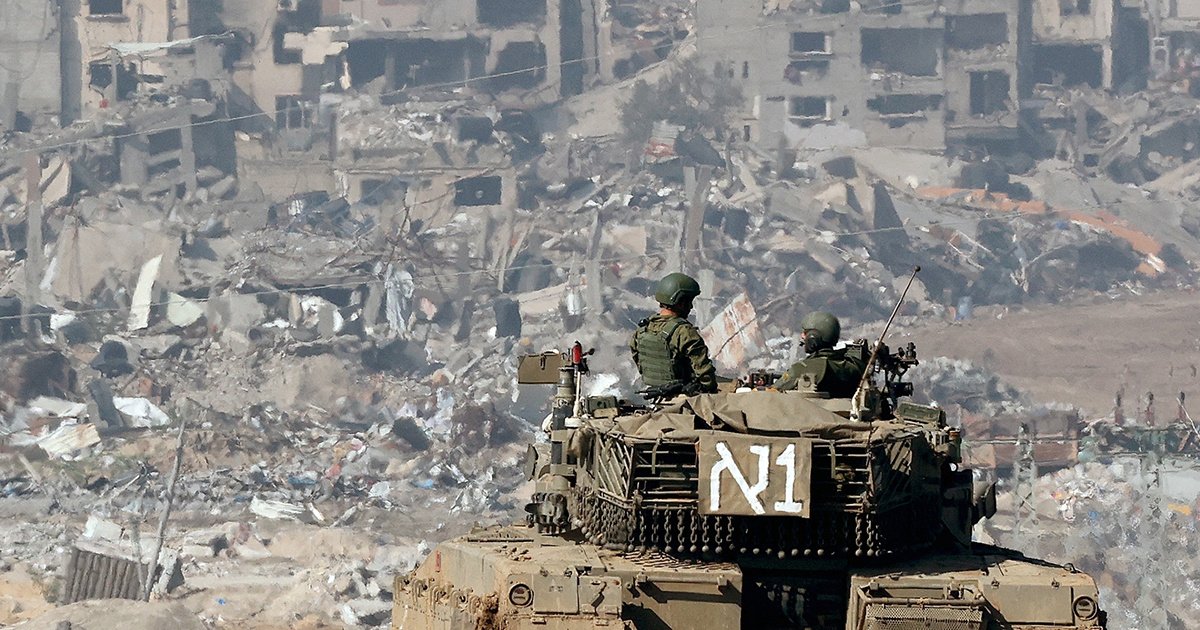
(Global conflicts overview; Source: Council on Foreign Relations, 2025)
- Subject: Political Influential Concerns and U.S.-Ukraine Summit
Summary:
Ukrainian President Zelenskiy met U.S. President Trump in Florida for critical talks on a potential peace plan, following Russian attacks and amid reports of progress toward a deal, though fundamental issues like security guarantees remain unresolved.
Findings:
The summit focused on ending the Russia-Ukraine war, with Trump claiming significant progress and both sides desiring peace. Discussions included revised frameworks excluding some prior demands, but European allies express concerns over potential concessions. Putin has communicated conditions, emphasizing territorial and NATO issues.
Why It Matters:
This meeting represents a potential turning point in the nearly four-year conflict, influencing European security, NATO commitments, and U.S. foreign policy priorities. Outcomes could reshape alliances, affect energy markets, and set precedents for dealing with aggressive revisionism, while failure risks prolonged warfare and broader instability.

(Trump administration political landscape; Source: The New York Times, 2025)
- Subject: Economic Instabilities
Summary:
Global markets closed 2025 near record highs with optimism for moderated growth, though U.S. indicators show mixed results including hiring slowdowns and persistent inflation under ongoing policy shifts.
Findings:
S&P 500 and other indexes rallied, with foreign markets outperforming amid AI-driven gains. Hong Kong forecasted stronger growth, while U.S. reports note rollercoaster performance with consumer spending driving expansion but challenges in labor and prices. Tariff policies and fiscal stances contribute to uncertainty.
Why It Matters:
Economic trajectories influence geopolitical leverage, domestic stability, and investment flows, with sustained growth offering opportunities but vulnerabilities risking recessions or inequality. Policy divergences, especially in trade and tech, could exacerbate global imbalances, affecting supply chains and international cooperation in a multipolar world.
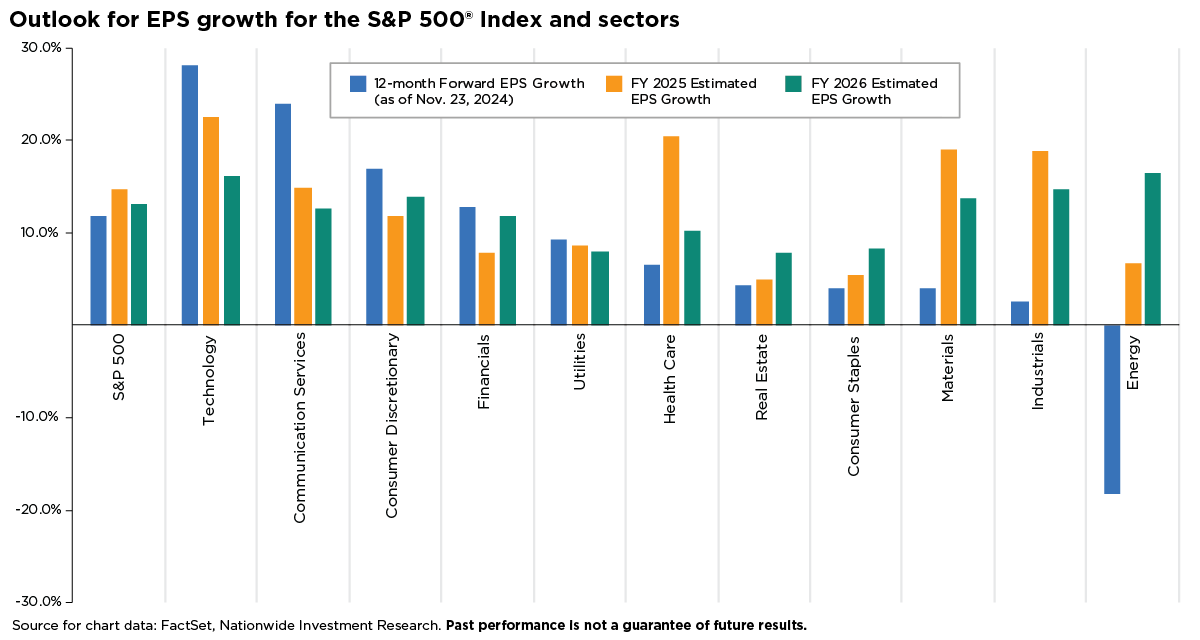
(Economic outlook charts; Source: Nationwide, 2025)
- Subject: Homeland Security Threats
Summary:
Escalating multidimensional threats including terrorism, cyber attacks from nation-states like China and Russia, insider risks, and converged physical-digital disruptions pose significant challenges to U.S. critical infrastructure and public safety.
Findings:
DHS assessments warn of foreign adversaries targeting infrastructure via cyber means, with Iranian assassination plots, Chinese hacking using AI tools, and domestic extremism. Ransomware, supply chain vulnerabilities, and drone risks highlight integrated threats requiring whole-of-government responses.
Why It Matters:
These converging risks threaten daily life, economic functions, and national resilience, potentially causing widespread disruption without traditional warfare. Addressing them demands enhanced intelligence sharing, redundancy in systems, and public-private collaboration to safeguard democracy and infrastructure against evolving adversarial tactics.

(Homeland threat assessment visual; Source: DHS, 2025)
- Subject: Defense Vulnerabilities and Penetrations
Summary:
China’s historic military modernization, including AI integration and nuclear expansion, renders the U.S. homeland increasingly vulnerable, while joint Russia-China exercises and patrols signal deepening coordination.
Findings:
Pentagon reports detail PLA advancements in intelligentized warfare, space dominance, and undersea networks. Sanctions on U.S. firms over Taiwan arms sales and bans on foreign drones underscore tensions. Russian-Chinese bomber patrols and anti-missile drills counter U.S. alliances.
Why It Matters:
Rapid adversary capabilities erode deterrence, heighten risks of miscalculation, and challenge U.S. technological edges, necessitating accelerated innovation and alliances. Vulnerabilities in supply chains and cyber domains amplify potential impacts on homeland defense and global stability.
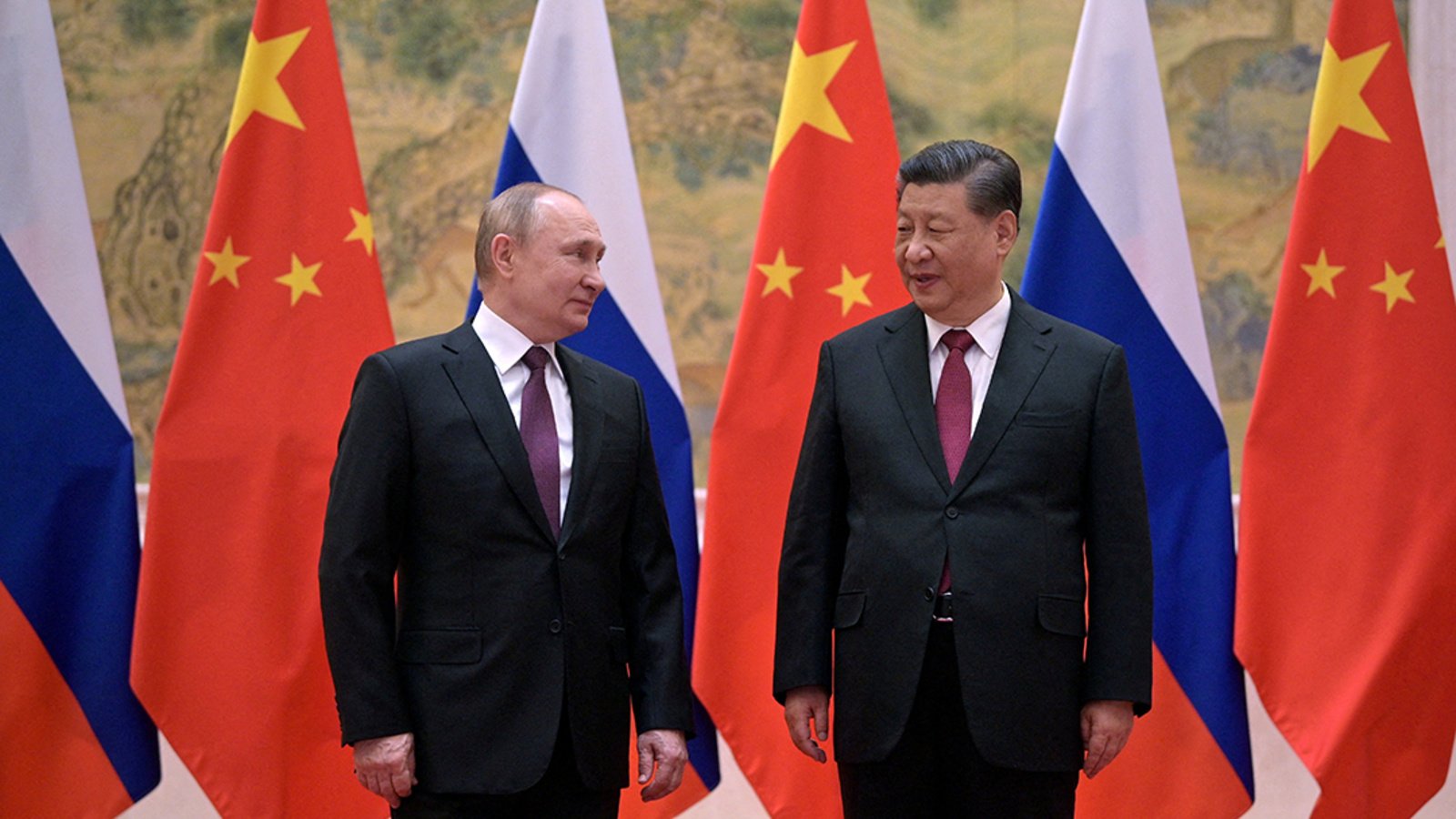
(China-Russia military ties; Source: Council on Foreign Relations, 2025)
- Subject: Global Concerns in International Relations
Summary:
U.S.-China-Russia dynamics feature strengthened Moscow-Beijing ties through joint exercises and diplomatic support, countering Western influence amid Ukraine negotiations and trade frictions.
Findings:
China and Russia conducted anti-missile drills and patrols, pledging mutual support on issues like Venezuela. Accusations of U.S. interference in bilateral relations persist, with deepened strategic partnerships challenging U.S.-led order.
Why It Matters:
This quasi-alliance revises global norms, complicates U.S. diplomacy, and risks proxy escalations. Balancing competition with cooperation is essential to prevent broader conflicts, while fostering alliances counters revisionist ambitions affecting trade, security, and multilateralism.
Bibliography:
Reuters. (2025, December 28). Zelenskiy meeting Trump in Florida for talks on Ukraine peace plan. https://www.reuters.com/world/europe/zelenskiy-meet-trump-florida-talks-ukraine-peace-plan-2025-12-28/
The Guardian. (2025, December 22). One dead in California floods as state braces for brutal week. https://www.theguardian.com/us-news/2025/dec/22/california-storms-flooding-atmospheric-river
ACLED. (2025). Conflict Index and Ukraine updates. https://acleddata.com/series/acled-conflict-index
U.S. Department of Homeland Security. (2025). Homeland Threat Assessment 2025. https://www.dhs.gov/sites/default/files/2024-10/24_0930_ia_24-320-ia-publication-2025-hta-final-30sep24-508.pdf
Department of Defense. (2025). Annual Report on Military and Security Developments Involving the People’s Republic of China. https://media.defense.gov/2025/Dec/23/2003849070/-1/-1/1/ANNUAL-REPORT-TO-CONGRESS-MILITARY-AND-SECURITY-DEVELOPMENTS-INVOLVING-THE-PEOPLES-REPUBLIC-OF-CHINA-2025.PDF
Council on Foreign Relations. (2025). China and Russia: Exploring Ties Between Two Authoritarian Powers. https://www.cfr.org/backgrounder/china-russia-relationship-xi-putin-taiwan-ukraine
Image sources as credited above (retrieved via open web search, 2025).
—End of Brief—
Period Covered: 28 DEC 2025
Prepared by: VeteranJaime
Network: CTX Private Intelligence Network
Classification: UNRESTRICTED//REL PUBLIC
 VeteranJaime
Leave a comment