Between the rugged peaks of the Andes Mountains, the lush expanses of the Amazon rainforest, and the arid deserts of North America, a silent genetic thread weaves through the indigenous peoples of the Americas: the predominance of blood type O. This blood type, characterized by the absence of A and B antigens on red blood cells, is recognized as the oldest in human history, dating back to our earliest ancestors. In the Americas, however, it manifests as a near-universal trait among many indigenous groups, serving as a biological marker of shared ancestry and adaptation. While global populations exhibit a diverse mix of ABO blood types—typically around 45% O, 40% A, 11% B, and 4% AB in many regions—the indigenous communities of the Americas often show frequencies of type O exceeding 80%, and in some cases approaching 100%. This striking uniformity has puzzled scientists for decades, prompting questions about ancient migrations, environmental pressures, and genetic drift.
The story begins with the peopling of the Americas. Archaeological and genetic evidence suggests that the first humans arrived in the New World via the Bering Land Bridge (Beringia) around 15,000 to 20,000 years ago, during the last Ice Age. These early migrants, originating from Siberian and East Asian populations, formed a small founding group that traversed the exposed landmass connecting Asia to North America. This bottleneck event—a reduction in population size—likely limited genetic diversity, leading to the fixation of certain traits, including blood type O.

To understand this phenomenon, let’s examine specific indigenous communities where type O blood dominates, drawing on historical studies and genetic analyses.
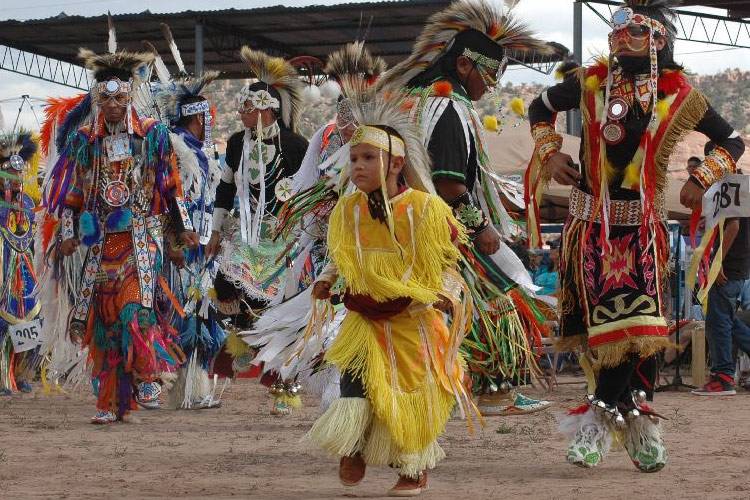
The Navajo of the American Southwest
In the arid landscapes of Arizona and New Mexico, the Navajo (Diné) people have long been noted for their high prevalence of type O blood. Early studies in the 1920s and 1930s reported frequencies around 73% to 79% type O among full-blooded Navajo individuals, significantly higher than in European-descended populations. While claims of 99% prevalence appear in some popular accounts, scientific data indicate a more moderate but still elevated rate, influenced by admixture with non-indigenous groups over time. This pattern reflects not just ancestry but also potential adaptive advantages; type O individuals may have historically shown resistance to certain diseases, such as syphilis, which ravaged post-contact populations.
The Navajo’s genetic profile ties back to Athabaskan-speaking peoples who migrated southward from Alaska around 1,000 years ago. Their blood type distribution underscores the founder effect: a small initial group carrying predominantly O alleles expanded, preserving this trait through generations.
The Quechua of the Peruvian Andes
High in the Peruvian Andes, the Quechua people—descendants of the Inca Empire—exhibit one of the most extreme examples of blood type uniformity. Studies from the mid-20th century onward have documented 100% type O in isolated Quechua communities, with no detectable A or B alleles. This absolute prevalence is rare globally and highlights the isolation of Andean populations. Genetic research reveals that these groups share specific O allele variants, such as O(1), O(1v), and O(1v(G542A)), which are markers of ancient Asian origins adapted during the Beringian standstill—a period when migrants paused in the land bridge, allowing genetic mutations to accumulate.
Living at altitudes exceeding 4,000 meters, the Quechua have adapted to hypoxia (low oxygen), but blood type O’s role here is debated. Some hypothesize it confers advantages in blood clotting or infection resistance, though evidence points more strongly to genetic drift than selection. The G542A mutation, found almost exclusively in Native Americans, serves as an ancestry informative marker, distinguishing indigenous lineages from others.

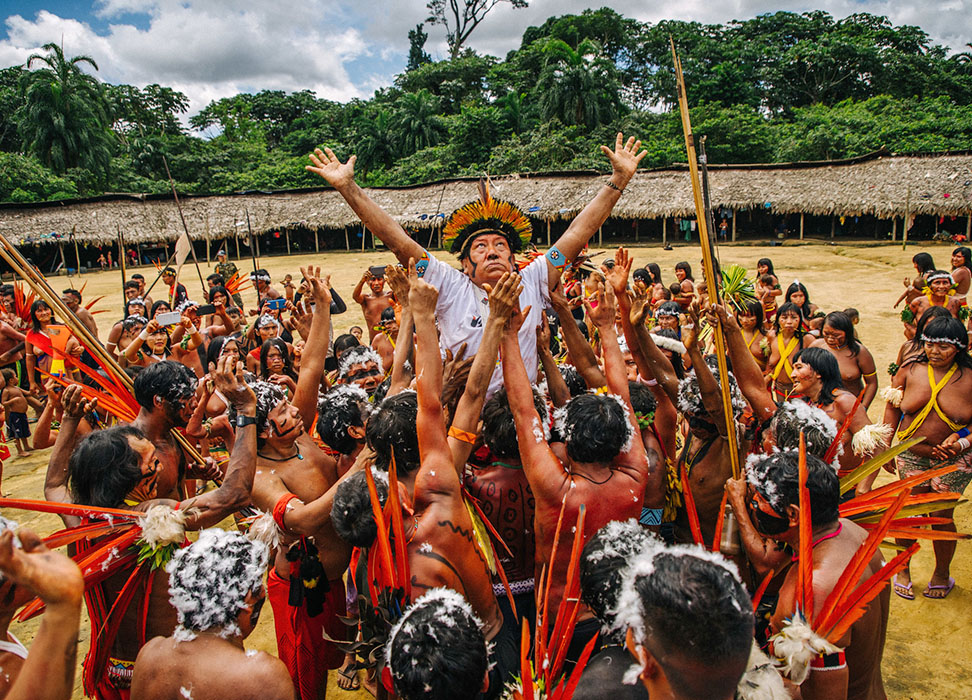
The Yanomami of the Brazilian Amazon
Deep in the Amazon rainforest, the Yanomami people, one of the most isolated indigenous groups in South America, show a 92% prevalence of type O blood. Molecular studies from the 1990s confirmed that their O alleles are homogeneous, mirroring those in other Native American populations. This uniformity persists despite their semi-nomadic lifestyle and exposure to tropical diseases, where type O might offer subtle protections against malaria or other pathogens—though this remains speculative.
The Yanomami’s genetic isolation has preserved ancient traits, but recent contact with outsiders has introduced new health challenges, including mercury poisoning from mining and infectious diseases. Their blood type profile reinforces the narrative of a shared founding population across the continents.
Indigenous Communities in Oaxaca, Mexico
In the diverse indigenous communities of Oaxaca, Mexico—home to groups like the Zapotec and Mixtec—blood type O reaches frequencies of 86% to 97%. A 2013 study of three Native Mexican populations found type O dominating, with Rh-positive also near-universal. This region, a cradle of Mesoamerican civilization, shows how pre-Columbian isolation maintained genetic homogeneity.
Broader surveys, including Mayan groups, report up to 98% type O, aligning with patterns seen in Central America. These high rates extend to other systems like Diego and Duffy antigens, which vary significantly from non-indigenous Brazilians and highlight ongoing admixture effects.
Is this true? If so, please expand on this information and create an in-depth article for my blog. Use open-source to gather relevant information and finalize the article; add visuals, and citations/credits where appropriate. Also, add a Bibliography at the end in APA format; The Mystery of Type O Blood: America’s Ancestral Code Between the Andes Mountains, the dense jungles of the Amazon, and the vast deserts of North America, flows an enigma that connects indigenous peoples: type O blood. This blood type, devoid of A and B antigens, is not only humanity’s oldest, but in the Americas it appears to be an almost universal common legacy, a biological echo of an ancient past. In the 1980s, scientists were surprised to discover that 99% of the Navajo people of Arizona shared this blood type. Years later, in the high mountains of the Peruvian Andes, something even more shocking was documented: 100% of the Quechua community possessed type O blood! Similar stories are replicated in the Brazilian jungles, where 92% of the Yanomami share this trait, and in the indigenous communities of Oaxaca, Mexico, where it reaches an astonishing 98%. What mystery lies behind this genetic uniformity? Is it the imprint of a mother civilization or an ancient adaptation to the environment? Type O blood is more than a trait; it’s a living symbol of identity, a code that tells a story of resilience, unity, and connection through the centuries. An enigma that continues to captivate both science and the collective imagination.

Cultural and Modern Implications
Beyond science, type O blood symbolizes resilience and unity for indigenous peoples—a “living code” of shared heritage amid centuries of colonization and displacement. In medical contexts, it poses challenges: high demand for O-negative donors in indigenous communities, and risks of alloimmunization in transfusions. Culturally, it fuels discussions on identity, as seen in repatriation efforts for blood samples taken from groups like the Yanomami.
As globalization increases admixture, these patterns may dilute, but they remain a testament to the Americas’ ancient human story. Ongoing research, including full genome sequencing, continues to unravel this enigma, bridging biology with history.
Bibliography
Estrada-Mena, B., Estrada, F. J., Ulloa-Arvizu, R., Guido, M., Méndez, R., Coral-Vázquez, R., Canto, P., Granados, J., Rubí-Castellanos, R., Rangel-Villalobos, H., & Sánchez-Doncel, A. (2009). Blood group O alleles in Native Americans: Implications in the peopling of the Americas. American Journal of Human Biology, 21(6), 857–859. https://pubmed.ncbi.nlm.nih.gov/19862808/
Morera, B., Vásquez, R., Pérez, G., & Barrantes, R. (2013). Genetic structure of three Native Mexican communities based on mtDNA haplogroups, and ABO and Rh blood group systems. Revista de Biología Tropical, 61(1), 71–83. https://pubmed.ncbi.nlm.nih.gov/23650674/
Mourant, A. E. (1966). Distribution of hereditary blood groups among Indians in South America. American Journal of Physical Anthropology, 24(3), 325–348. https://onlinelibrary.wiley.com/doi/abs/10.1002/ajpa.1330240306
Moura, R. R., Coelho, A. V. C., Balbino, V. Q., Crovella, S., & Brandão, L. A. C. (2015). Molecular bases of the ABO blood groups of Indians from the Brazilian Amazon region. Vox Sanguinis, 67(1), 79–84. https://www.karger.com/Article/Pdf/462618
Wikipedia contributors. (2025). Blood type distribution by country. Wikipedia, The Free Encyclopedia. https://en.wikipedia.org/wiki/Blood_type_distribution_by_country
Laurence, M. (2016, December 20). Is the high frequency of blood type O in native Americans due to natural selection? Sandwalk. https://sandwalk.blogspot.com/2016/12/is-high-frequency-of-blood-type-o-in.html
D’Adamo, P. (n.d.). Blood groups and the history of peoples. Dadamo.com. https://www.dadamo.com/dadamo2024/show_page.pl?1010
Wikipedia contributors. (2025). Genetic history of the Indigenous peoples of the Americas. Wikipedia, The Free Encyclopedia. https://en.wikipedia.org/wiki/Genetic_history_of_the_Indigenous_peoples_of_the_Americas
Silva, M. C. C. D., Klautau-Guimarães, M. D. N., & Grisolia, C. K. (2021). Blood groups in Native Americans: A look beyond ABO and Rh. Hematology, Transfusion and Cell Therapy, 43(1), 67–73. https://pmc.ncbi.nlm.nih.gov/articles/PMC8056887/
 VeteranJaime
Leave a comment