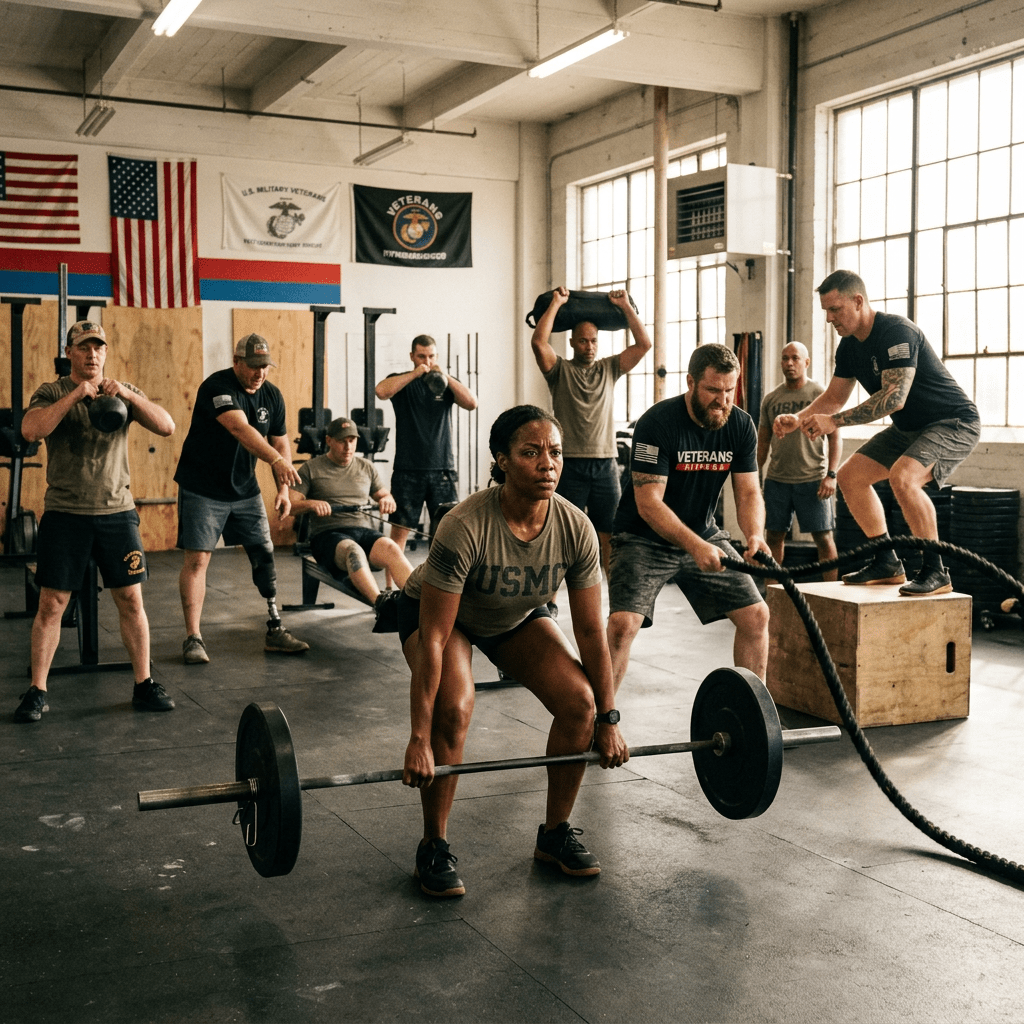
Reclaiming Athleticism, Explosiveness, and Metabolic Readiness — Without Breaking Down the Body
Phase 3 is where the training begins to feel athletic again. After rebuilding foundational strength in Phase 2, veterans are now ready to introduce controlled power, speed, and conditioning work. This phase is not about high‑impact punishment workouts or the “smoke sessions” many remember from military life. Instead, Phase 3 is about precision, explosiveness, and metabolic conditioning that strengthens the heart, lungs, and nervous system without aggravating old injuries.
Veterans often miss the feeling of being fast, capable, and mission‑ready. But many also carry the scars of service — knee pain, back tightness, shoulder limitations, or reduced mobility. Phase 3 respects those realities. The goal is to rebuild athleticism safely, using movements that generate power without excessive impact, and conditioning that elevates heart rate without destroying joints.
This phase is about reclaiming the warrior’s engine — the ability to move with purpose, react quickly, and sustain effort under controlled stress. It’s about feeling like an athlete again, not for combat, but for life.
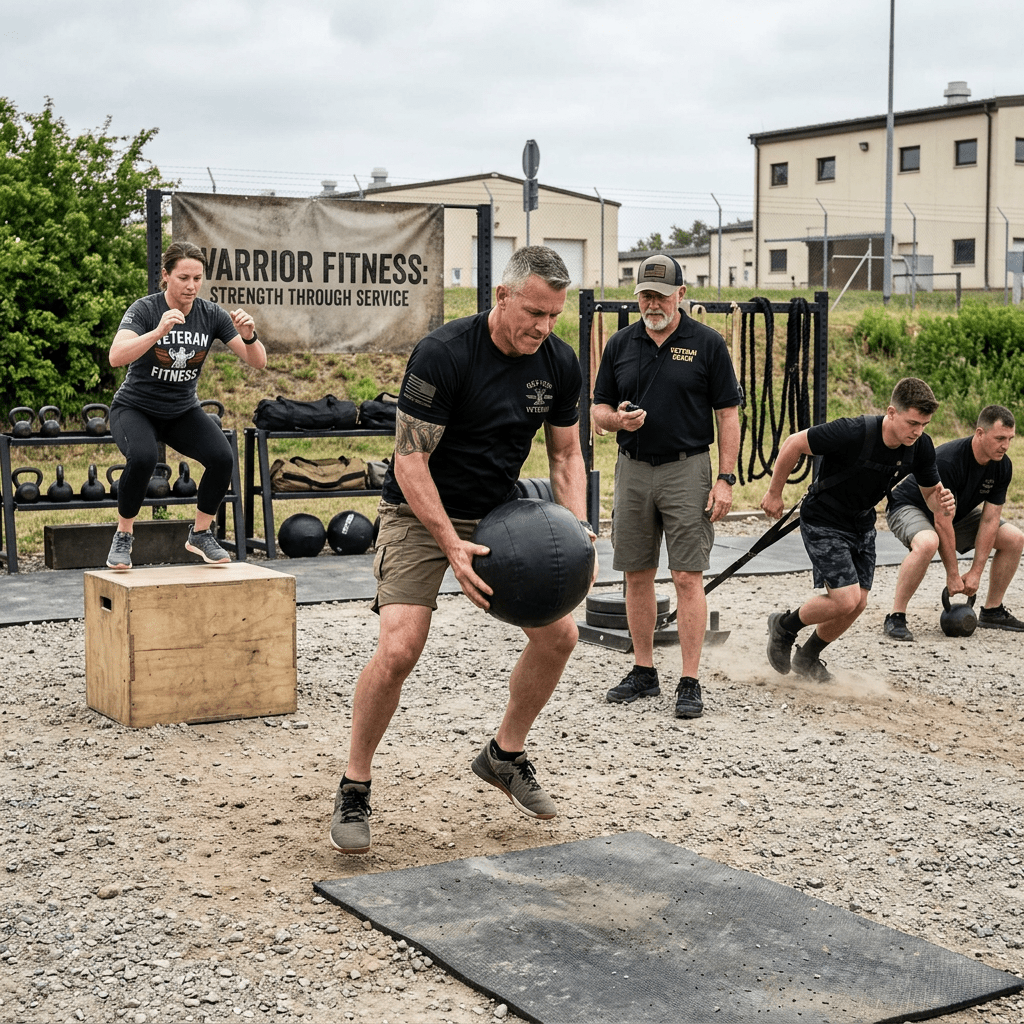
The Purpose of Phase 3
Phase 3 introduces a new training stimulus: power. Strength is the ability to produce force. Power is the ability to produce force quickly. Veterans once relied on this instinctively — sprinting, reacting, climbing, lifting, carrying. Over time, especially after service, power is often the first quality to fade.
Phase 3 brings it back.
This phase focuses on:
- Developing controlled explosiveness
- Improving reaction time and coordination
- Increasing cardiovascular capacity
- Enhancing metabolic conditioning
- Strengthening tendons and connective tissue
- Building confidence in fast, athletic movement
The goal is not to train like a 19‑year‑old infantryman. The goal is to train like a seasoned warrior — powerful, efficient, and durable.
Training Structure for Phase 3
Phase 3 follows a three‑day weekly power and conditioning split, with an optional mobility day to support recovery.
Weekly Layout
- Day 1 — Power + Upper Body Conditioning
- Day 2 — Power + Lower Body Conditioning
- Day 3 — Full‑Body Athletic Conditioning
- Optional Day 4 — Mobility + Recovery Flow
Each day blends power movements, conditioning circuits, and controlled intensity.
DAY 1 — POWER + UPPER BODY CONDITIONING
Day 1 introduces upper‑body power and metabolic conditioning that challenges the heart and lungs without overwhelming the joints.
Warm‑Up
- Light band work
- Arm swings and torso rotations
- Slow push‑ups or incline push‑ups
Power Block
Explosive Push‑Ups (or fast tempo push‑ups) Focus on speed, not height. Even a quick press from the knees counts.
Med Ball Chest Throws (or band‑accelerated presses) If no equipment: perform fast, controlled band presses.
Conditioning Block
Perform 3–4 rounds:
- Push‑ups (moderate pace)
- Bent‑over rows
- Battle ropes or band punches
- 30–45 seconds of fast walking, marching, or light jogging
Cooldown
- Chest and shoulder stretching
- Slow breathing to bring the heart rate down
DAY 2 — POWER + LOWER BODY CONDITIONING
This session rebuilds lower‑body explosiveness while protecting the knees and back.
Warm‑Up
- Hip mobility
- Glute activation
- Light squats
Power Block
Box Step‑Up Drives Drive the knee upward explosively, but land softly.
Low‑Impact Jump Variations Options include:
- Mini hops
- Lateral line hops
- Low‑box jumps
- Power step‑outs
Conditioning Block
Perform 3–4 rounds:
- Goblet squats
- Romanian deadlifts
- Reverse lunges
- 30–45 seconds of incline walking or cycling
Cooldown
- Hamstring and hip flexor stretching
- Light walking to flush the legs
DAY 3 — FULL‑BODY ATHLETIC CONDITIONING
This day ties everything together — power, strength, conditioning, and coordination.
Warm‑Up
- Dynamic leg swings
- Torso rotations
- Light marching or jogging
Power Block
Kettlebell Swings (or banded hip hinges) Explosive hip extension without heavy loading.
Medicine Ball Slams (or fast band pull‑downs) Focus on speed and full‑body engagement.
Conditioning Circuit
Perform 4–5 rounds:
- Squats
- Push‑ups
- Rows
- Farmer carries
- 45–60 seconds of steady‑state cardio
This circuit builds real‑world capability — lifting, carrying, moving, and sustaining effort.
Cooldown
- Full‑body stretching
- Slow breathing
- Gentle mobility flow
Optional Day 4 — Mobility + Recovery Flow
Veterans often underestimate recovery. This optional day helps restore joint health, reduce stiffness, and prepare the body for the next week.
Recovery Flow Includes:
- Hip mobility
- Thoracic spine rotations
- Light yoga‑style stretching
- Deep breathing
- Soft tissue work (foam roller or massage ball)
This day is not optional for veterans with chronic pain — it is essential.
How to Progress in Phase 3
Progression in this phase is based on quality, not intensity. Veterans should increase difficulty only when movements feel smooth and controlled.
Progress every 1–2 weeks by:
- Increasing speed (while maintaining form)
- Adding 1–2 reps to power movements
- Adding 10–15 seconds to conditioning intervals
- Increasing load slightly (5–10 lbs)
- Improving coordination and range of motion
The goal is to feel athletic again — not exhausted.
Why Phase 3 Works for Veterans
Phase 3 respects the veteran body while reigniting the athletic qualities many thought were gone forever. It builds power without impact, conditioning without burnout, and confidence without ego. Veterans often report that this phase makes them feel “alive” again — capable, fast, and mission‑ready in a way that supports longevity, not injury.
This is the phase where the warrior spirit resurfaces — disciplined, explosive, and controlled.
Workout Inspiration for Veterans
Here are some YouTube videos provided — a curated set of practical, enjoyable workout content you can use to spark ideas, build confidence, and stay consistent in fitness:




 VeteranJaime
Leave a comment