Understanding the Nature of Yoha
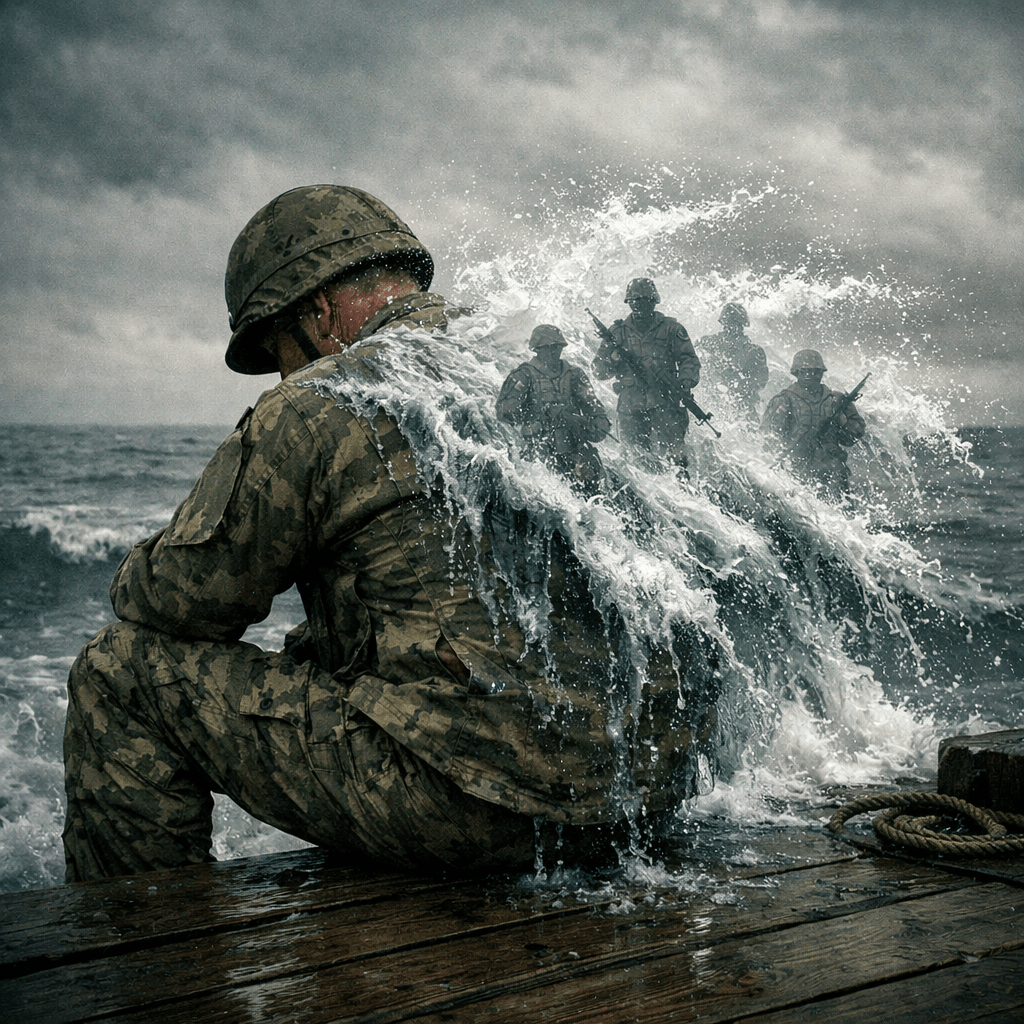
There is a Japanese word that captures the essence of what Veterans feel long after the battlefield is gone: 余波 – Yoha.
It means the lingering waves after an impact. The ripples that continue long after the stone has sunk. The aftershocks that persist after the event itself ends.
In the ocean, a wave does not disappear the moment the wind stops. It travels. It spreads. It reshapes the shoreline long after the storm has passed.
The same is true for war.
The Wave That Never Fully Stops
War is an impact. Combat is an impact. Trauma is an impact. Loss is an impact. Responsibility is an impact. Survival is an impact. And impacts create waves.
Some waves crash loudly – the kind that knock you off your feet. Others move quietly beneath the surface, subtle but powerful. Some waves fade quickly. Others travel for years, even decades.
Yoha Zen begins with the recognition that the waves are natural.
You are not weak because the waves continue. You are not broken because the waves return. You are not failing because the waves still move inside you. You are experiencing Yoha – the lingering waves of a life lived at full intensity.
Why the Waves Continue
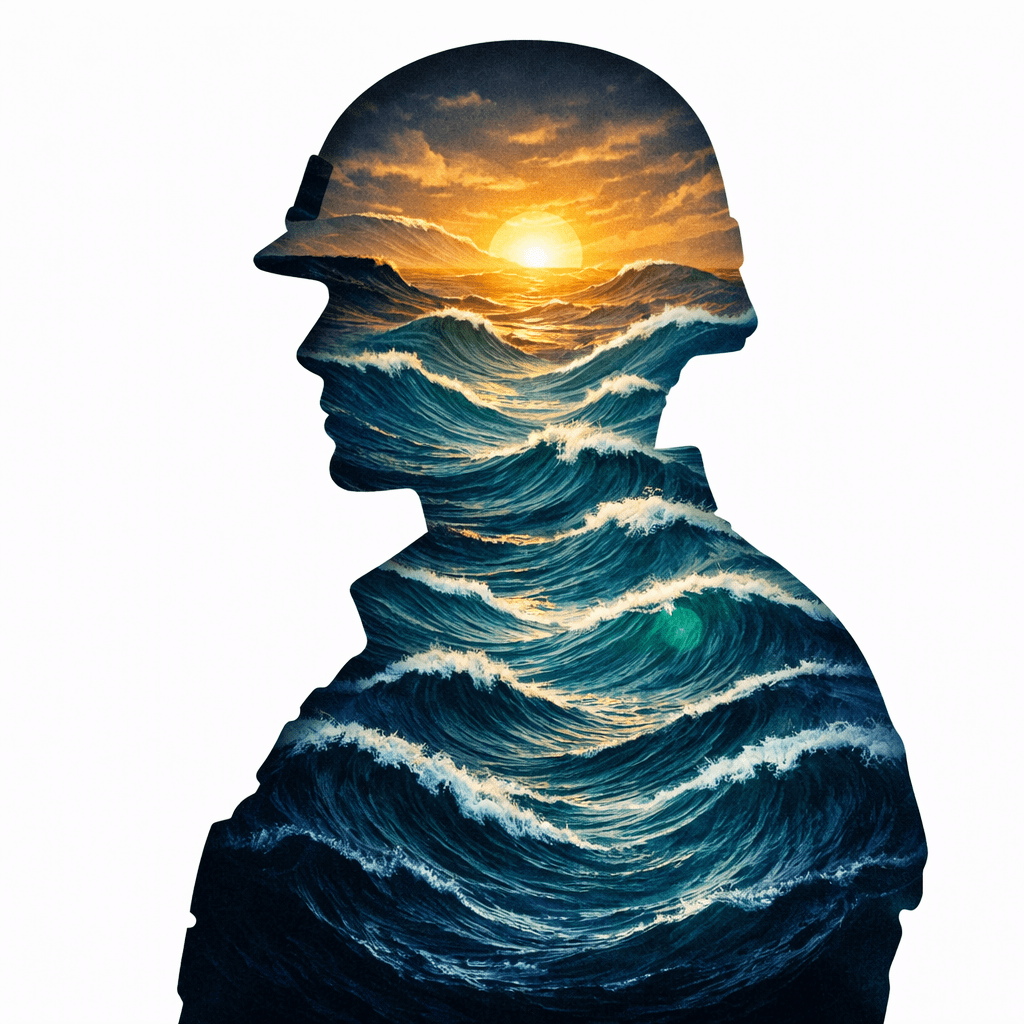
The waves continue because the mind and body learned to survive in an environment where survival was not guaranteed. They learned:
- to react before thinking
- to stay alert even when exhausted
- to suppress emotion to complete the mission
- to read danger in silence
- to trust instinct over comfort
- to move toward chaos instead of away from it
These adaptations do not vanish when the deployment ends. They remain because the body does not know the war is over.
The waves continue because the training worked.
The Civilian World and the Warrior’s Waves
The challenge is not the waves themselves. The challenge is the environment the waves now move through.
In combat, the waves made sense. In civilian life, they feel out of place. Hypervigilance is useful in a firefight. It is exhausting in a grocery store. Emotional suppression is necessary in chaos. It is damaging in relationships. Rapid decision-making saves lives in combat. It creates conflict in peaceful environments.
The waves are not wrong. They are simply misaligned with the world around you.
Yoha Zen teaches the warrior to realign the waves – not by eliminating them, but by understanding them.
The Three Types of Waves
Yoha Zen identifies three primary forms of lingering waves:
- The Physical Wave – This is the body’s memory of war. The body remembers what the mind tries to forget.
- tension
- startle responses
- sleep distruption
- adrenaline spikes
- restlessness
- fatigue
- The Emotional Wave – This is the heart’s memory of war. There emotions rise and fall like tides.
- grief
- guilt
- anger
- numbness
- longing
- isolation
- The Identity Wave – This is the self’s memory of war. Identity is not destroyed by war – it is reshaped by it.
- “Who am I now?”
- Where do I belong?”
- What is my purpose?”
- What happened to the person I used to be?”
The Danger of Misunderstanding the Waves
Many veterans misinterpret the waves as:
- weakness
- failure
- disorder
- personal flaw
- something to hide
- something to fight
- something to numb
This misunderstanding creates secondary suffering – the suffering that comes not from the waves themselves, but from resisting them.

Yoha Zen teaches that the waves are not the enemy. The misunderstanding is.
The First Step: Naming the Waves
In Yoha Zen, naming is the beginning of mastery.
When a wave rises – a memory, a reaction, a feeling – you name it:
- “This is the Echo.”
- “This is a physical wave.”
- “This is an emotional wave.”
- “This is an identity wave.”
Naming creates distance. Distance creates clarity. Clarity creates control.
A Veteran’s Reflection: The First Time I Saw the Waves
There was a moment, years after coming home, when I realized the waves were not fandom. I was sitting alone, feeling a heaviness I couldn’t explain. No trigger. No memory. Just a weight.
For the first time, instead of pushing it away, I asked myself:
“What kind of wave is this?”
It was grief – not for a single person, but for a version of myself I had lost. A version I didn’t even know I was mourning.
Naming it didn’t make it disappear. But it made it understandable. And understanding made it bearable.
The Philosophy of Yoha Zen
Yoha Zen is built on a simple truth:
The waves do not stop. But you can learn to ride them.
You do not drown by feeling. You drown by fighting the current.
Yoha Zen teaches:
- how to float
- how to breathe
- how to navigate
- how to find balance
- how to move with waves instead of against them
The Aftermath is not a storm to survive. It is a sea to learn.
The Warrior’s Path Forward
Understanding the waves is the foundation of the entire philosophy. Without this understanding, the warrior remains trapped in confusion, shame, or resistance.
With this understanding, the warrior begins to see:
- the Echo as information
- the waves as natural
- the reactions as learned
- the emotions as valid
- the identity shift as evolution
- the aftermath as a path
Yoha Zen begins with the waves. It continues with the pillars. It ends with integration.






 VeteranJaime
Leave a comment