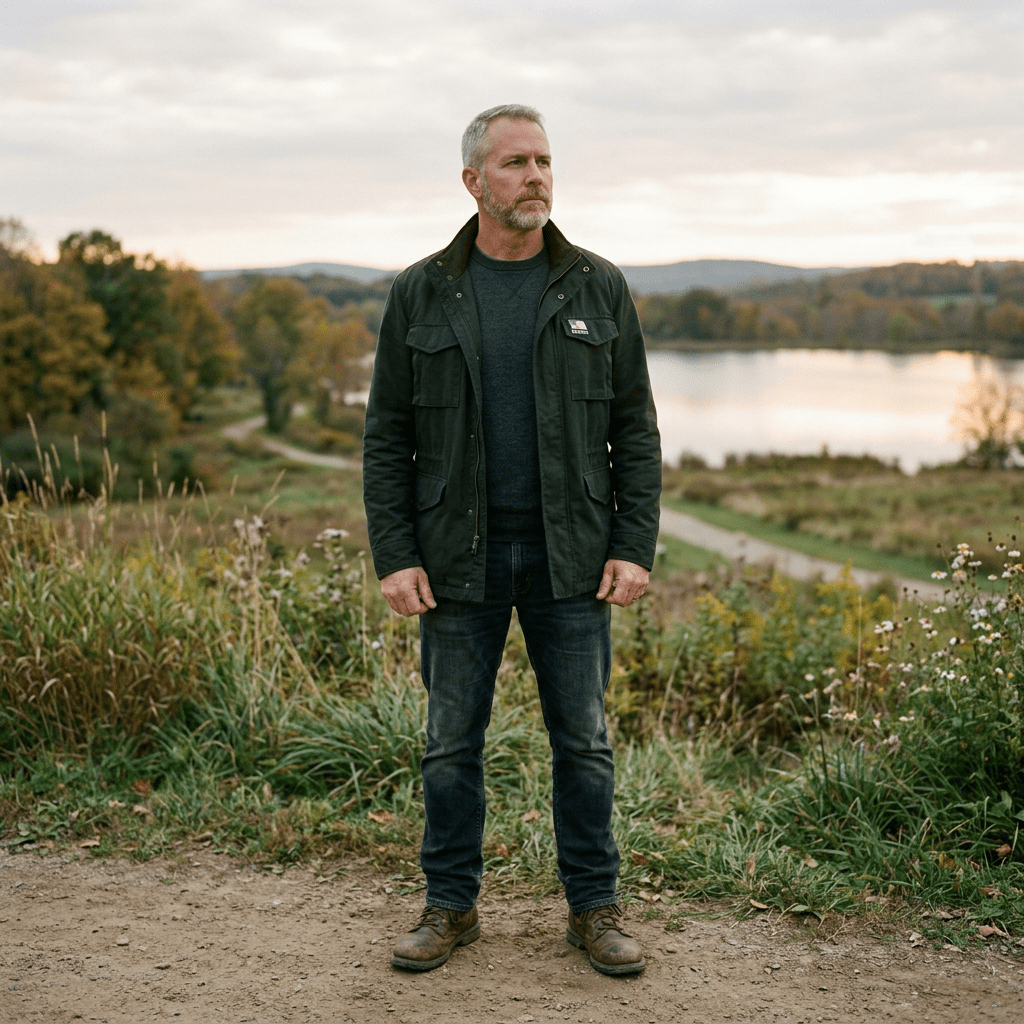
Presence is a simple word, but for a warrior, it is one of the most difficult disciplines to master. In combat, presence is instinctive — a sharpened awareness, a readiness to act, a constant scanning of the environment. But in the aftermath, presence becomes something entirely different. It becomes a weapon not against external threats, but against the internal ones.
Presence is the ability to return to the moment instead of being pulled into the past. Presence is the ability to inhabit your body instead of bracing for danger. Presence is the ability to see clearly instead of reacting automatically.
Presence is not relaxation. Presence is not softness. Presence is not passivity.
Presence is control.
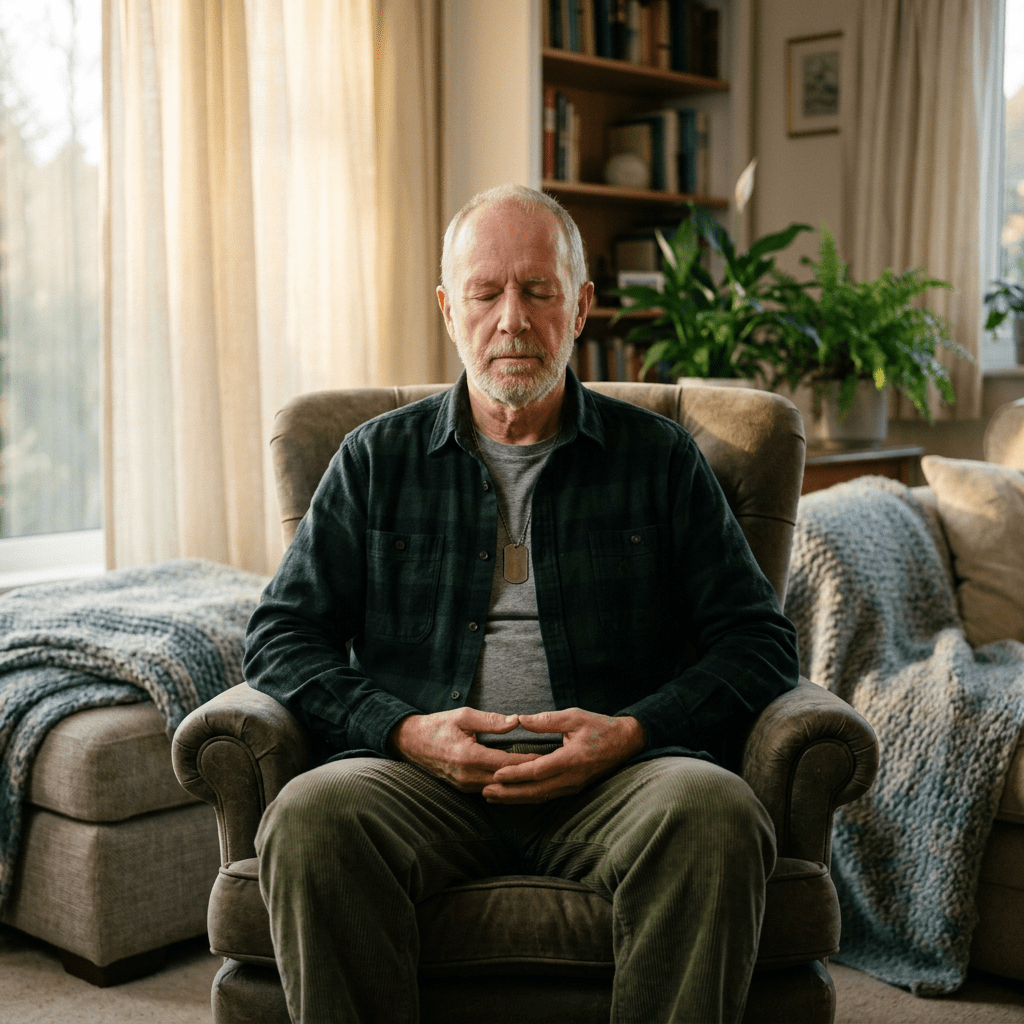
The Battlefield Mindset That Never Turns Off
Combat teaches the body to stay alert. It teaches the mind to anticipate danger. It teaches the senses to scan for threats. These skills are essential in war — they keep you alive. But after service, the same instincts can become exhausting.
You may find yourself:
- sitting with your back to the wall
- scanning every room
- tracking movement without thinking
- reacting to sudden noises
- feeling restless in calm environments
- distrusting silence
- bracing for danger that never comes
These reactions are not irrational. They are learned. They are the body’s way of saying, “I remember what happened. I remember what kept us alive.”
Presence is the discipline of teaching the body that the war is not happening now.
The Civilian World Moves Differently
One of the hardest parts of reintegration is adjusting to a world that does not operate on the same tempo as combat. In war, everything is immediate. Everything is urgent. Everything matters.
In civilian life:
- people move slowly
- conversations wander
- decisions take time
- emotions surface unpredictably
- danger is rare
- structure is inconsistent
This mismatch creates friction. The warrior feels out of sync, out of place, out of rhythm.
Presence is the practice of learning the new rhythm without losing the old one.
The Challenge of Trusting Safety Again
Safety is not a feeling — it is a belief. And for many veterans, that belief was shattered long before they came home.
In combat, safety is an illusion. In the aftermath, safety feels suspicious.
You may find yourself thinking:
- “If I relax, something will happen.”
- “If I let my guard down, I’ll be vulnerable.”
- “If I trust this moment, I’ll be caught off guard.”
These thoughts are not paranoia. They are conditioning.
Presence is the slow, patient process of teaching the body that safety is real enough to inhabit.
Presence as a Weapon
Presence is not about becoming less of a warrior. It is about becoming a warrior with choice.
Presence gives you:
- control over your reactions
- clarity in your decisions
- the ability to rest
- the ability to connect
- the ability to live without constant tension
Presence is the weapon that turns survival mode into living mode.
The Physiology of Presence
Presence is not mystical. It is biological.
When you return to the moment:
- the nervous system downshifts
- the breath deepens
- the heart rate stabilizes
- the brain shifts from threat mode to awareness mode
- the body releases tension
Presence is the antidote to hypervigilance.
Grounding Techniques in Yoha Zen
Yoha Zen teaches presence through simple, repeatable practices.
1. The Anchor Breath
A slow inhale. A controlled exhale. The same breath used before squeezing a trigger.
2. The Sensory Reset
Notice five things you see. Four you feel. Three you hear. Two you smell. One you taste.
This pulls the mind out of memory and into the moment.
3. The Weight Shift
Feel your feet on the ground. Feel gravity. Feel the body’s weight.
This reminds the nervous system that you are not in motion.
4. The Hand Check
Touch something with texture — keys, fabric, a stone. This gives the mind a physical anchor.
5. The Presence Statement
Say quietly: “I am here.”
Not “I’m fine.” Not “I’m safe.” Just “I am here.”
Presence begins with location, not emotion.
A Veteran’s Reflection: The First Time Presence Made Sense
There was a day — ordinary, unremarkable — when I sat on a park bench and realized I wasn’t actually there. My body was present, but my mind was scanning, tracking, analyzing. I wasn’t watching the world. I was watching for threats.
Then something shifted. I noticed the wind. I noticed the warmth of the sun. I noticed the sound of leaves.
For a moment — just a moment — I was present.
It didn’t last long. But it was enough.
Presence wasn’t about shutting off the warrior. It was about giving the warrior a place to rest.
Presence and the Echo
Presence does not silence the Echo. It puts it in context.
When the Echo rises, presence says:
- “This is a memory.”
- “This is a reaction.”
- “This is my body remembering.”
- “This is not happening now.”
Presence is the bridge between the past and the present.
Presence and Identity
Presence helps veterans rebuild identity by grounding them in who they are now — not who they were in uniform, not who they were in combat, not who they were before service.
Presence says:
- “I am here.”
- “I am alive.”
- “I am becoming.”
Identity is not found in the past. It is found in the present.
Presence and Connection
Presence makes connection possible.
When the mind is in the past, connection is impossible. When the mind is in the future, connection is fragile. When the mind is in the moment, connection becomes real.
Presence allows veterans to:
- listen without analyzing
- speak without filtering
- feel without bracing
- trust without scanning
Presence is the foundation of relationships after war.
Presence as the Second Pillar
Presence is the second pillar of Yoha Zen because it gives the warrior the ability to choose how to respond instead of reacting automatically.
Presence is not the end of the journey. It is the beginning of control.






 VeteranJaime
Leave a comment