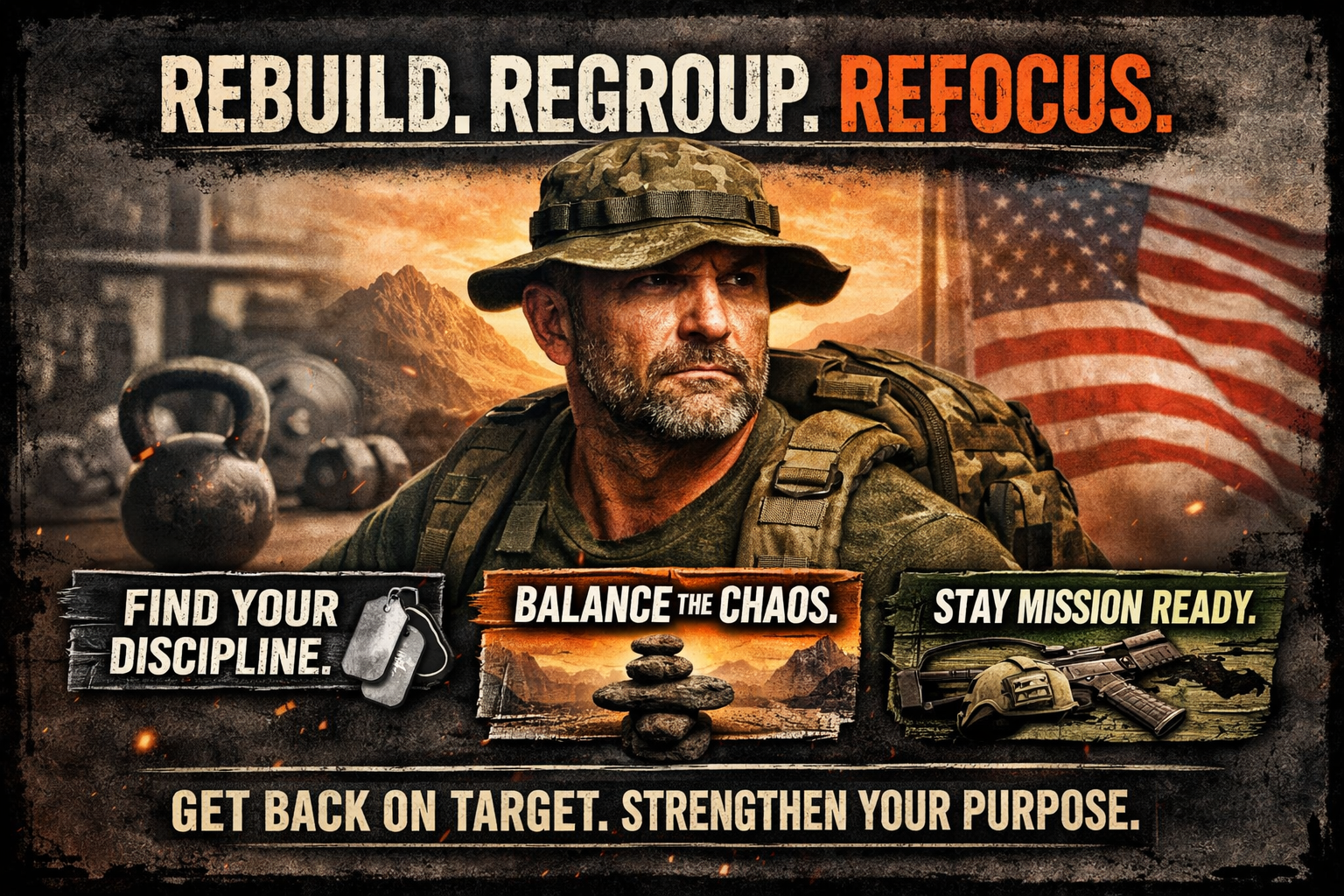
There is a moment in every warrior’s journey through the aftermath when the question rises quietly, almost painfully:
“Who am I now?”
It is not a question of nostalgia. It is not a question of regret. It is a question of identity — the deepest, most disorienting question a veteran can face.
In uniform, identity is clear. After service, identity becomes a shifting landscape.
Reforging the self is the first step of integration — the long, slow, deliberate process of becoming whole again. It is not about returning to who you were before war. It is about becoming someone new, someone forged from experience, resilience, and truth.
The Shattering of Identity
War does not simply change a person — it fractures them. Not in a destructive way, but in a transformative one.
You become:
- the person you were before service
- the warrior you became during service
- the person you are trying to be after service
These identities do not align easily. They pull in different directions. They speak different languages. They carry different expectations.
The aftermath is the collision of these selves.
Reforging the self means learning how to bring them together.
The Myth of “Going Back to Normal”
One of the most damaging expectations placed on veterans — by society, by family, and often by themselves — is the idea that they should “go back to normal.”
But there is no going back.
You cannot unsee what you saw. You cannot unlearn what you learned. You cannot unknow what you know. You cannot return to the person you were before war.
And you are not meant to.
Reforging the self begins with accepting that the old identity is gone — not lost, but transformed.
The Warrior Self: Strength and Shadow
The warrior self is powerful. It is disciplined, decisive, resilient, and loyal. It is forged in hardship and sharpened in danger.
But the warrior self also carries:
- vigilance
- aggression
- emotional suppression
- distrust
- readiness for conflict
- instinctive reaction
These traits are not flaws. They are adaptations.
Reforging the self means honoring the warrior without letting the warrior dominate your life.

The Civilian Self: Softness and Uncertainty
The civilian self is often the part that feels foreign after service. It is the part that:
- feels emotions
- seeks connection
- desires peace
- values vulnerability
- wants stability
- longs for belonging
For many veterans, this self feels weak or unfamiliar. But it is not weak — it is human.
Reforging the self means allowing this part to exist without shame.
The Emerging Self: The Warrior in Peace
The emerging self is the integration of the warrior and the civilian. It is the version of you that:
- carries strength without aggression
- holds vigilance without fear
- expresses emotion without collapse
- leads without commanding
- protects without isolating
- loves without withdrawing
- serves without sacrificing identity
This self is not created overnight. It is forged slowly, intentionally, through practice and reflection.
The Identity Gap
Between the warrior self and the civilian self lies the identity gap — the space where veterans often feel:
- lost
- disconnected
- restless
- misunderstood
- out of place
- unsure of purpose
- unsure of direction
This gap is not a void. It is a forge.
Reforging the self happens in this space.

A Veteran’s Reflection: The Moment Identity Shifted
There was a moment — quiet, unexpected — when I realized I was no longer who I had been in uniform, but I wasn’t fully a civilian either. I was something in between, something undefined.
For a long time, that terrified me. I felt unanchored, unrecognizable, unfinished.
But over time, I realized something important:
I wasn’t losing myself. I was becoming myself.
Identity wasn’t disappearing. It was evolving.
The Tools of Reforging
Reforging the self requires tools — not physical tools, but internal ones.
1. Reflection
Understanding what changed, what remained, and what matters now.
2. Acceptance
Acknowledging the past without letting it define the future.
3. Presence
Returning to the moment instead of living in memory.
4. Service
Rebuilding purpose through contribution.
5. Movement
Grounding identity in the body.
6. Connection
Allowing others to be part of your evolution.
Identity is not rebuilt alone.
The Role of the Echo in Identity
The Echo is not just a memory — it is a reminder of who you were, what you survived, and what shaped you.
Reforging the self means learning to hear the Echo without obeying it.
The Echo becomes:
- a teacher
- a guide
- a source of wisdom
- a reminder of strength
Not a tyrant.
Identity and Purpose
Identity and purpose are intertwined. When one shifts, the other follows.
Reforging the self means asking:
- “What matters to me now?”
- “What do I want to build?”
- “What do I want to contribute?”
- “Who am I becoming?”
Purpose is not found. Purpose is forged.
Reforging as the First Step of Integration
Integration begins with identity because identity shapes:
- how you think
- how you feel
- how you act
- how you connect
- how you heal
Reforging the self is not the end of the journey. It is the beginning of becoming whole.
The next chapter explores The Circle of Belonging, the second step of integration — rebuilding relationships, community, and connection after war.




Leave a Reply