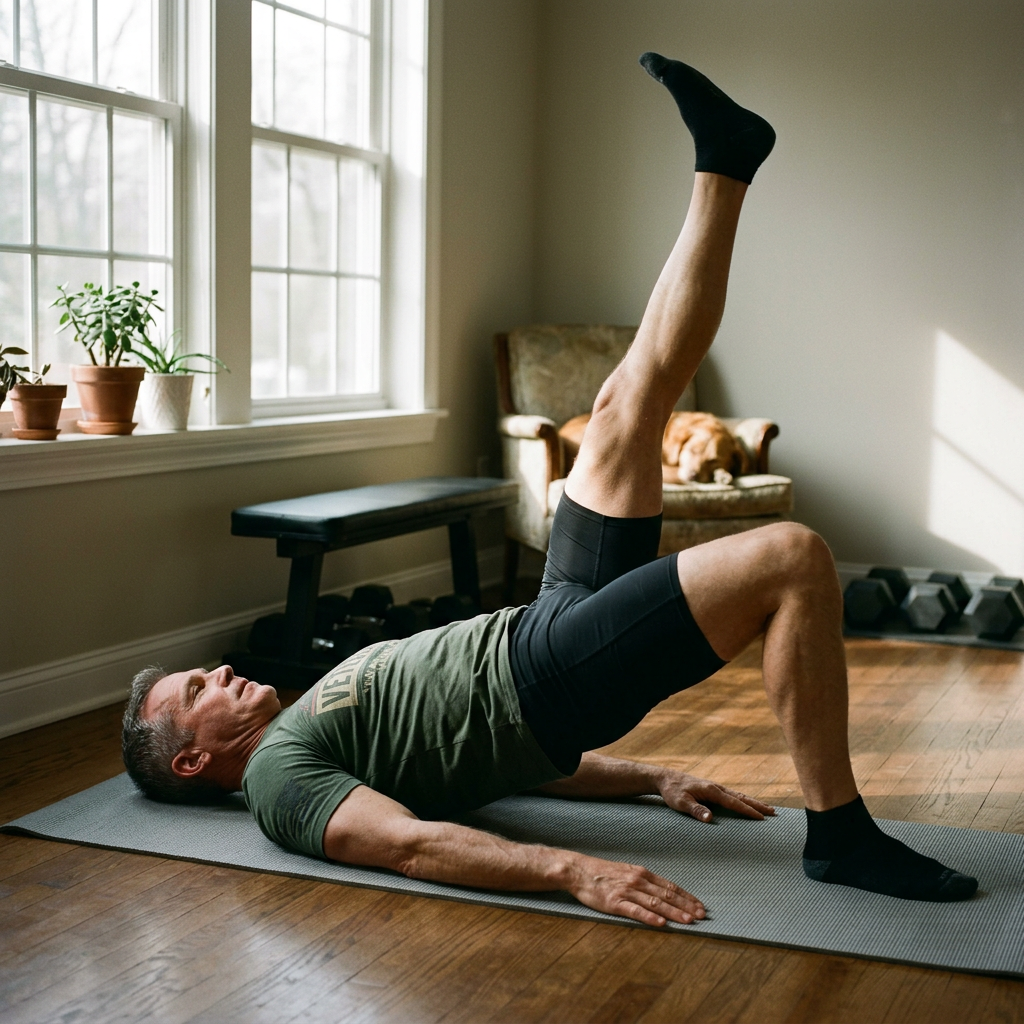
Veterans know better than most that the body keeps score. Years of ruck marches, uneven terrain, heavy loads, and the constant demand for readiness leave a lasting imprint on the hips—the central stabilizers of nearly every movement we make. When those stabilizers weaken, everything downstream begins to fail: knees collapse inward, ankles lose alignment, lower backs tighten, and compensatory patterns take over.
What runners experience as IT Band pain or knee instability is the same pattern many Veterans face when returning to fitness after service. The hips are the quiet workhorses of strength, balance, and injury prevention. Rebuilding them is not optional—it’s foundational.

Why Hip Strength Matters for Veterans
Weak or tight hips create a cascade of problems familiar to anyone who’s spent time under load or moved with intensity:
- IT Band irritation from poor knee tracking
- Lower‑back pain caused by an unstable pelvis
- Knee pain during squats, lunges, or daily movement
- Achilles and foot pain from altered gait
- Loss of power when climbing, sprinting, or carrying weight
For Veterans dealing with old injuries, scar tissue, or muscular imbalances, hip strength becomes even more critical. Strong hips restore proper movement patterns, reduce strain on overworked muscles, and help the body fire in the correct sequence—especially the glutes, which often “turn off” after years of compensating.
Key Muscle Groups to Rebuild
- Hip Flexors – Raise the leg, stabilize stride, and support explosive movement.
- Adductors – Control inward movement and knee stability.
- Glutes (Maximus, Medius, Minimus) – Drive extension, rotation, and overall power.
When these muscles weaken, Veterans often experience gait changes, reduced endurance, and chronic pain that makes training frustrating.
Top Hip‑Strengthening Movements for Veterans
These exercises require little to no equipment and can be done at home, in the gym, or while traveling. They are ideal for Veterans rebuilding strength after service‑related wear and tear.
- Clam Shells – Activate glute medius for knee stability.
- Glute Bridges / Single‑Leg Bridges – Restore hip extension and glute firing.
- Lunge Matrix – Strengthens hips through multiple planes of motion.
- Hip Flexor Raises – Improve marching, stepping, and load‑bearing mechanics.
- Monster Walks – Build lateral hip strength and correct knee collapse.
- Side Plank with Leg Lift – Train core‑hip integration and pelvic stability.
- Fire Hydrants – Target rotational strength and glute activation.
Once these foundational movements feel strong, Veterans can progress to weighted exercises such as:
- Bulgarian Split Squats
- Step‑Ups (front, side, curtsy)
- Single‑Leg Deadlifts
These build real‑world strength—useful for rucking, climbing, and daily life.
A Veteran‑Focused Approach to Hip Training
Veterans often carry unique physical histories: surgeries, impact injuries, years of load carriage, or long periods of inactivity after service. Hip strengthening offers a path back to stability, confidence, and pain‑free movement.
A few minutes of “pre‑hab” before workouts—glute bridges, monster walks, or hip flexor raises—can dramatically reduce injury risk and improve performance. Strong hips mean better alignment, better endurance, and fewer setbacks.
This isn’t about aesthetics or chasing perfect form. It’s about reclaiming function, rebuilding resilience, and honoring the body that carried you through service.




Leave a Reply