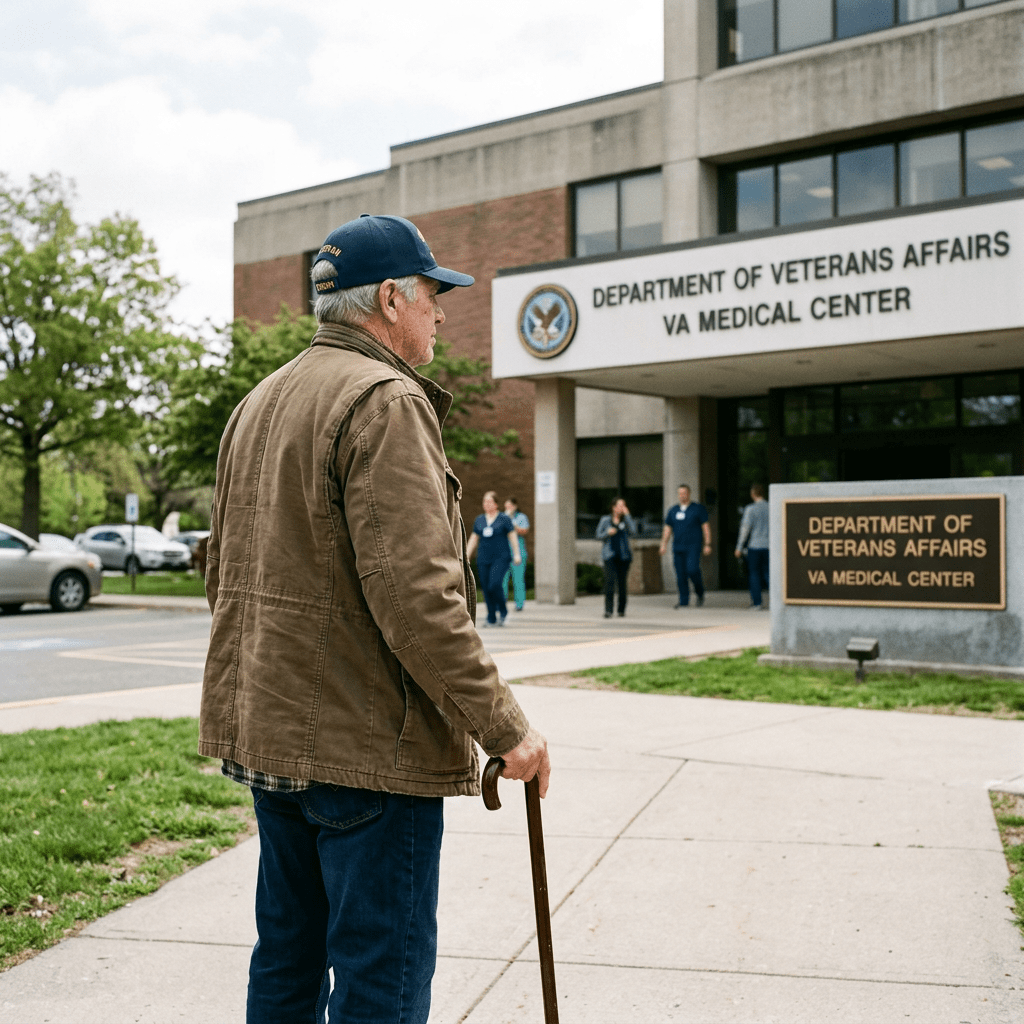
A growing body of research indicates that Inclusion Body Myositis (IBM) may share environmental and immunological triggers with ALS, a condition already recognized by the VA as presumptive. Veterans are now urging the VA to grant IBM the same status, citing significantly higher diagnosis rates among service members and decades of exposure to solvents, fuels, deicing chemicals, and other toxins. The VA has initiated a formal review, but veterans argue the evidence is already strong enough to act.
Introduction
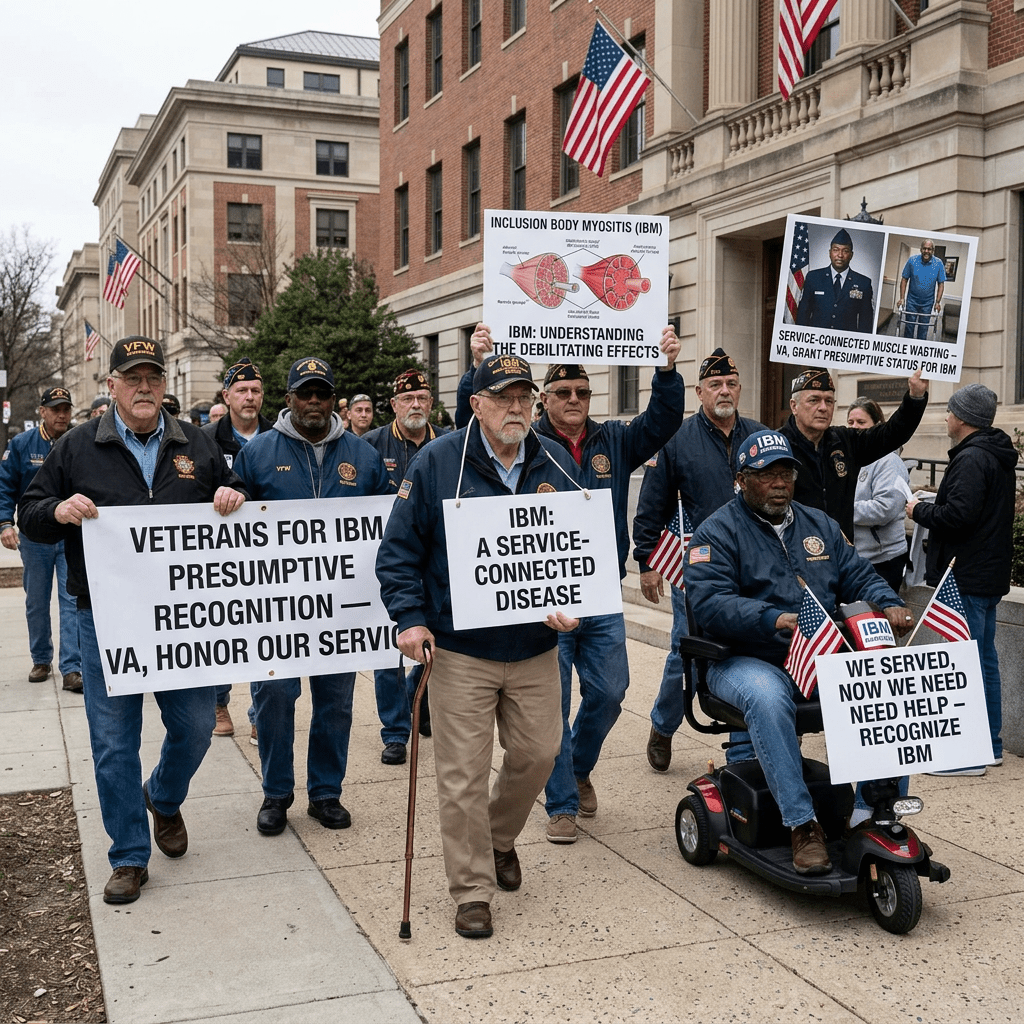
A recent investigative report highlights a critical issue affecting veterans nationwide: the fight to have Inclusion Body Myositis (IBM) recognized as a presumptive service‑connected condition. Veterans like Navy pilot William “Auggie” Augustine have spent more than a decade battling the VA for recognition, benefits, and access to essential medical support (Veterans InfoTap, 2026).
Their message is simple: IBM is real, it’s devastating, and it’s connected to military service.
What Is Inclusion Body Myositis (IBM)?
IBM is a rare, progressive, degenerative muscle disease that slowly erodes strength, mobility, and eventually the ability to swallow or breathe independently. It is often described by veterans as “ALS in slow motion” (Veterans InfoTap, 2026).
Key characteristics include:
- Progressive muscle weakness
- Degeneration of muscle fibers
- Presence of abnormal protein accumulations
- Poor response to anti‑inflammatory treatments
- Delayed or difficult diagnosis (often requiring biopsy)
Researchers note that IBM typically begins after age 45 and is more common in men — a demographic heavily represented in the veteran population (Lloyd, 2026).
Why Veterans Are at Higher Risk
Multiple studies and firsthand accounts point to a common thread: environmental exposures unique to military service.
In the video, Auggie describes:
- Constant exposure to solvents and degreasers
- Prolonged contact with jet fuel
- Missions flown with clothing soaked in deicing fluid
- Aircraft maintenance conducted inside enclosed hangars
These exposures are consistent with known triggers for autoimmune and neuromuscular disorders (Lloyd, 2026).
Advocates estimate that veterans may develop IBM at six to nineteen times the rate of the general population (Veterans InfoTap, 2026).
The ALS Connection
This is where the fight becomes urgent.
ALS is already a VA presumptive condition.
If a veteran served anywhere and is later diagnosed with ALS, the VA automatically grants service connection.
IBM shares key biological markers with ALS.
Researchers at Baylor College of Medicine and UNC Chapel Hill have documented:
- Similar protein accumulations
- Similar degenerative pathways
- Similar immune‑system triggers
Dr. Thomas Lloyd explains that both diseases may be the body’s response to the same exposure, just with different outcomes (Lloyd, 2026).
This is the core argument: If the exposure causes ALS — and ALS is presumptive — then IBM should be presumptive as well.
The Human Cost
Auggie’s story is not unique.
- It took him over a decade to secure VA benefits.
- He required multiple appeals and legal support.
- Many veterans die or lose mobility before their claims are resolved.
Attorney Ursula McCabe, who has represented nearly 80 IBM veterans, notes that the administrative burden is crushing:
“They’re getting buried in paperwork while their diseases are progressing.” — McCabe, as cited in Veterans InfoTap (2026)
Without presumptive status, veterans must prove:
- A current diagnosis
- An in‑service event, exposure, or injury
- A medical nexus linking the two
For IBM, that nexus is often the hardest part — despite mounting scientific evidence.
Where the VA Stands Now
The VA has acknowledged:
- Veterans are 1.5 times more likely to develop ALS
- No formal association has yet been established for IBM
- A new National Academies of Science, Engineering, and Medicine review is underway
- Public comments closed in April 2026
- A listening session is scheduled for May 14, 2026 (Veterans InfoTap, 2026)
The VA maintains that IBM claims are still adjudicated on a case‑by‑case basis.
Why Presumptive Recognition Matters
Presumptive status unlocks:
- Faster disability ratings
- Access to specialized medical care
- Housing and vehicle adaptation grants
- Mobility equipment
- Caregiver support
- Reduced administrative burden
For a degenerative disease like IBM, time is everything.
What Veterans Can Do Right Now
1. Contact Your Congressional Representatives
Pressure from constituents accelerates VA action. Reference the research linking IBM and ALS.
2. Work With a Doctor to Build a Nexus Letter
Even without presumptive status, a strong medical opinion can win a claim.
3. File the Claim Anyway
The VA explicitly states that lack of a diagnostic code does not prevent approval.
4. Share This Information
Most veterans have never heard of IBM — until it’s too late.
Analyst Assessment
Based on the transcript and current research, the push for IBM presumptive recognition is grounded in:
- Documented environmental exposures
- Strong epidemiological indicators
- Biological similarities to ALS
- Consistent veteran testimony
- Expert medical opinion
The VA’s ongoing review signals institutional awareness, but the timeline remains uncertain. Given the progressive nature of IBM, delayed recognition directly harms affected veterans. Advocacy, congressional pressure, and continued research dissemination are critical.
Veterans InfoTap. (2026). Study shows connection! Veterans and doctors urge VA to recognize as presumptive condition [Video]. YouTube. https://www.youtube.com/watch?v=zZJ93XdwZcs
Lloyd, T. (2026). Baylor College of Medicine neurology research on IBM and ALS. As cited in Veterans InfoTap (2026).
McCabe, U. (2026). Legal advocacy for IBM veterans. As cited in Veterans InfoTap (2026).






 VeteranJaime
Leave a comment