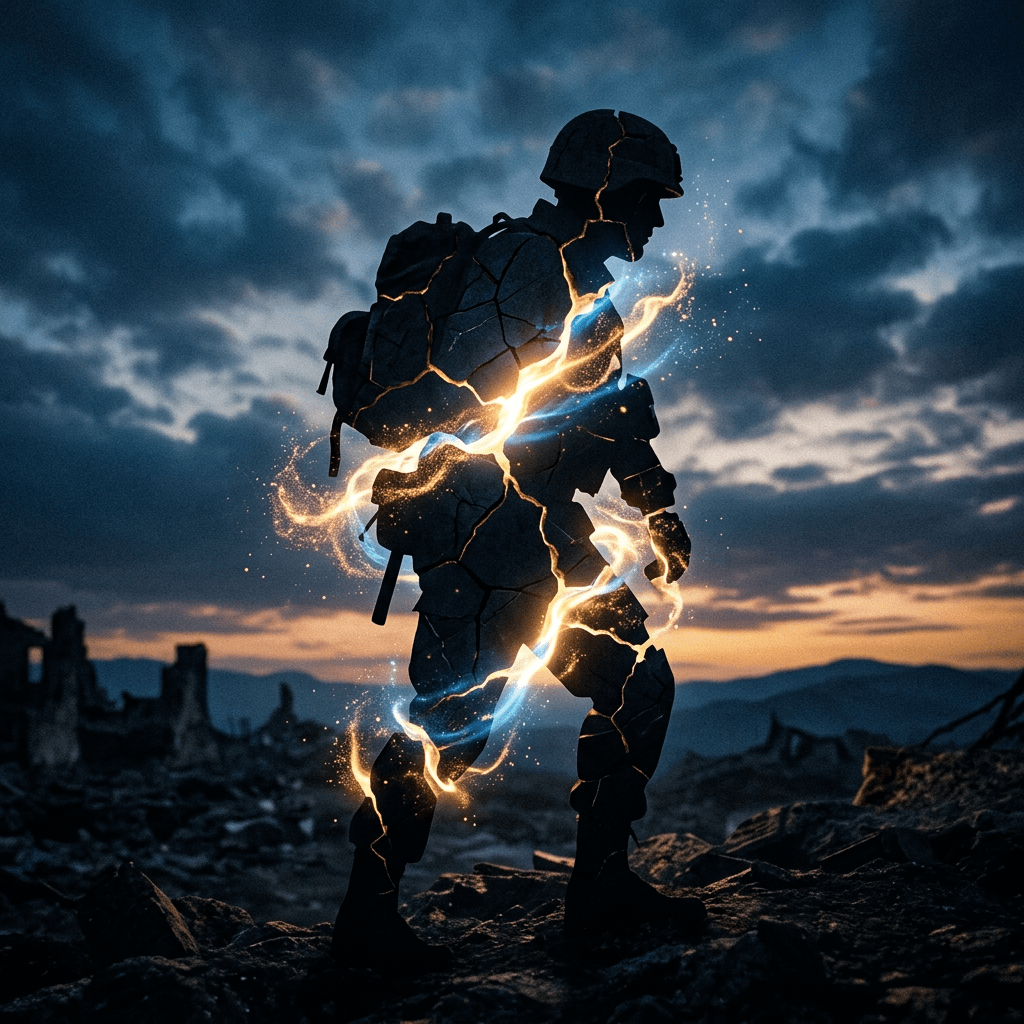
There’s a truth about military service that rarely gets spoken out loud: most of us don’t break in dramatic moments. We fracture slowly. Quietly. Invisibly.
The first crack doesn’t happen downrange. It happens long before that — in training, in the pressure to perform, in the expectation to be unshakeable. By the time deployment comes, the fractures are already there. The war just deepens them.
Multiple deployments don’t just test your body or your skills. They test the structure of who you are. Every mission, every loss, every moment of uncertainty adds another line to the glass. You learn to function with those cracks. You learn to move with them. You learn to hide them so well that even the people closest to you can’t see the damage.
Coming home doesn’t magically repair anything. If anything, it makes the fractures more visible — at least to you. Civilians see the uniform, the discipline, the strength. They don’t see the internal splintering that comes from years of carrying more than any one person should.
But here’s the part we often forget: Fractured doesn’t mean broken. Shattered doesn’t mean ruined. Pieces don’t mean failure.
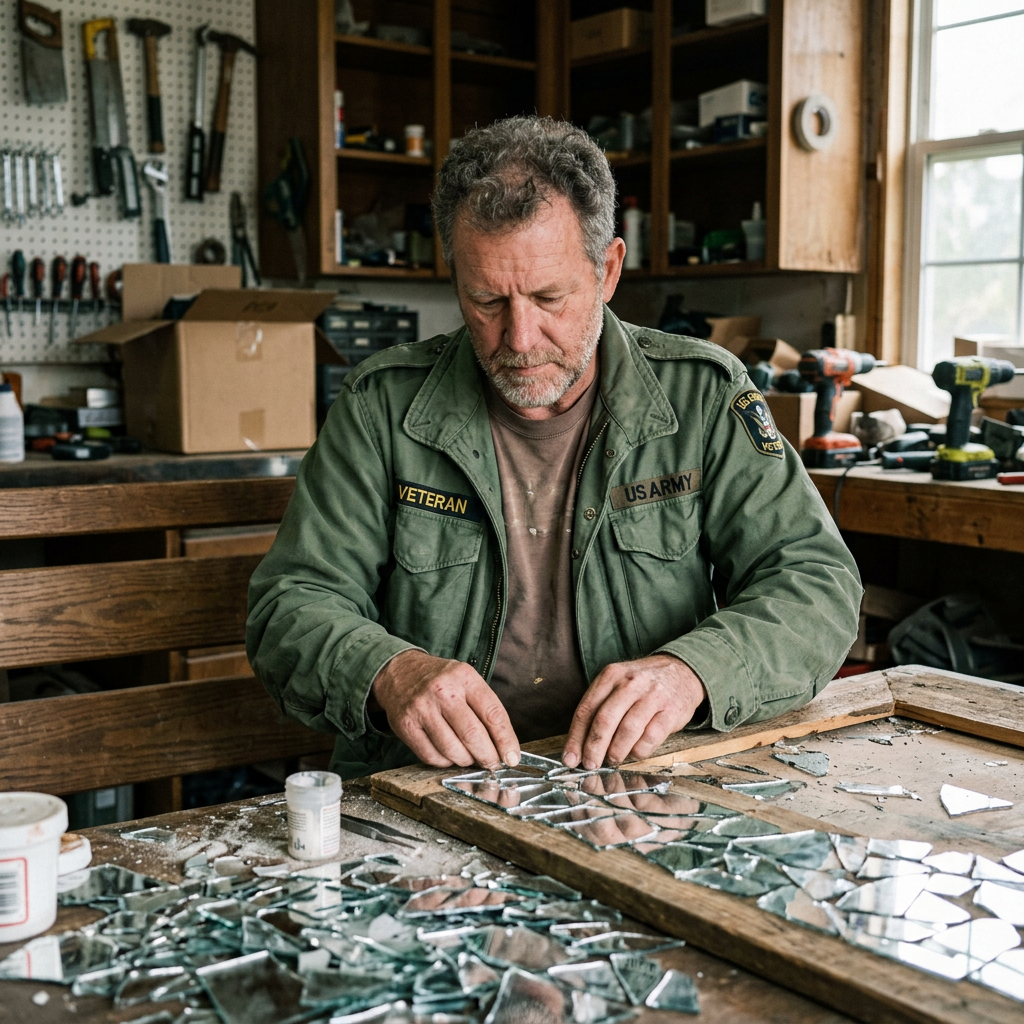
A soldier’s identity is like glass — shaped by pressure, marked by impact, but still capable of reflecting light. The cracks tell a story. They show where you’ve been, what you’ve endured, and what you’ve survived.
Rebuilding after service isn’t about pretending the fractures never happened. It’s about gathering the pieces with honesty. It’s about accepting that you’ve changed. It’s about learning to see strength in the places that once felt like weakness.
You are not who you were before the deployments. You are not who you were during them. You are something new — something forged from every shard that refused to stay on the ground.
This is the work of rebuilding. This is the work of becoming whole again. This is the work of honoring every piece of who you are now.







 VeteranJaime
Leave a comment