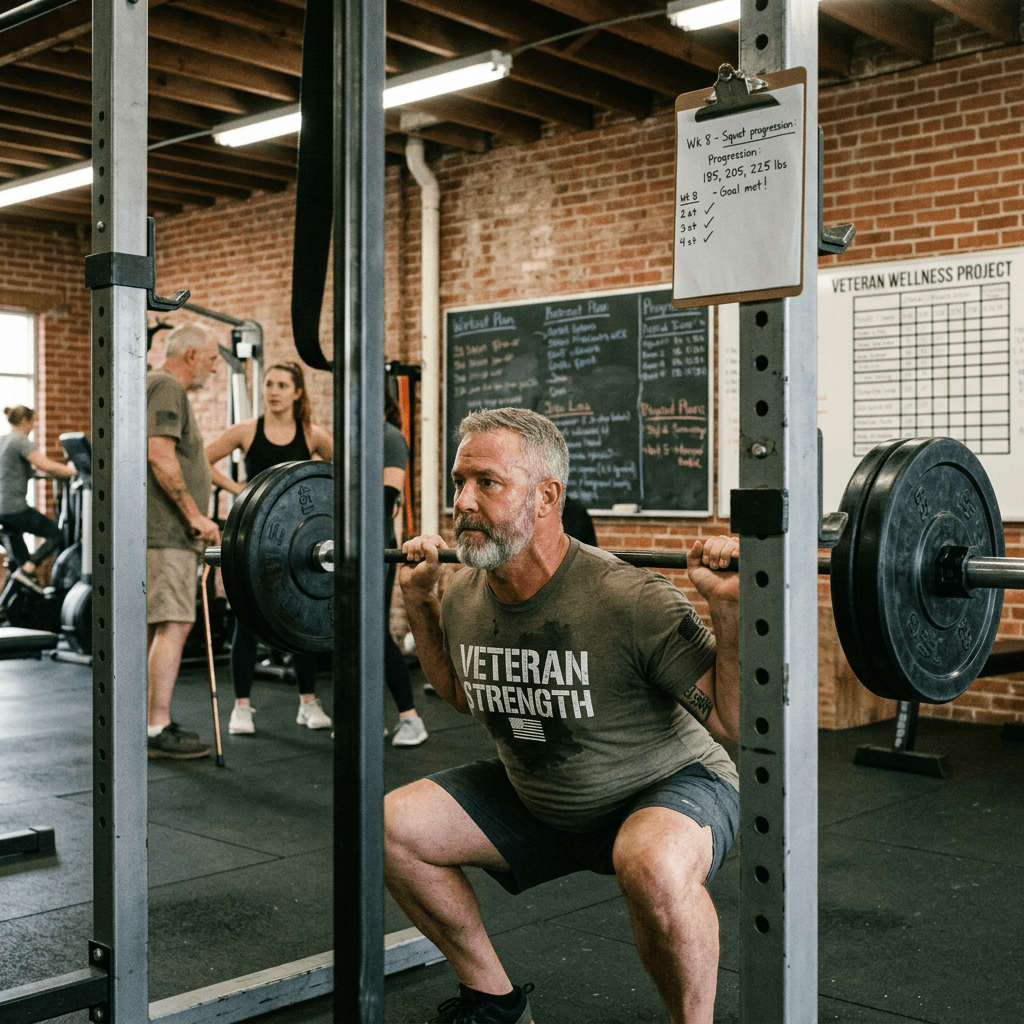
Rebuilding Power, Stability, and Confidence Through Intentional Progression
Phase 2 marks the moment when veterans begin to feel their strength return — not the reckless, pain‑through‑it kind of strength that military life often demanded, but a grounded, controlled, sustainable strength that respects the body you have today. After Phase 1 reestablished foundational movement and reconnected you with your physical baseline, Phase 2 introduces structured strength progression designed specifically for the veteran body: disciplined, joint‑friendly, and mission‑focused.
Many veterans carry the physical residue of service — old ruck injuries, impact trauma, shoulder strain, lower‑back tightness, or the chronic stiffness that comes from years of high‑stress living. Strength training must therefore be approached with intention. This phase is not about chasing numbers or proving anything. It is about rebuilding capability, restoring confidence, and developing the kind of strength that supports longevity, mobility, and daily life.
Phase 2 uses slow, controlled reps, moderate resistance, and deliberate progression. Veterans thrive under structure, and this phase provides exactly that: a clear weekly plan, measurable improvements, and movements that build real‑world capability without aggravating old injuries.
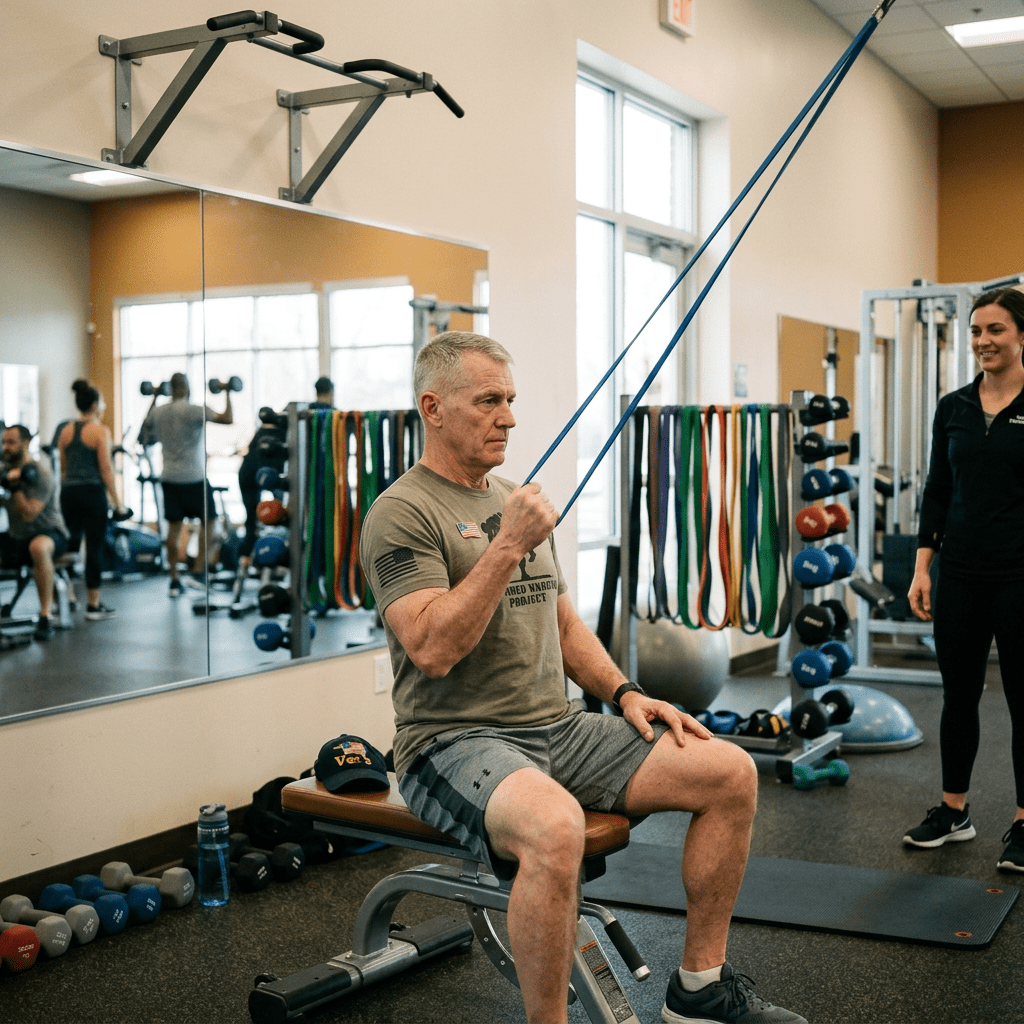
Why Phase 2 Matters for Veterans
Strength progression is more than physical training — it is identity reconstruction. Veterans often feel disconnected from their bodies after service, especially when pain, stiffness, or fatigue become daily companions. Phase 2 helps restore that connection by rebuilding strength in a way that feels achievable and sustainable.
This phase focuses on:
- Rebuilding joint stability
- Strengthening connective tissue
- Improving movement quality
- Increasing muscular endurance
- Developing controlled power
- Restoring confidence in physical capability
Veterans often rediscover a sense of pride during this phase — the feeling of being strong again, not for combat, but for life.
The Structure of Phase 2
Phase 2 follows a three‑day weekly strength split, with an optional conditioning day for veterans who recover well. Each session includes a warm‑up, a primary strength block, accessory work, and a cooldown.
Weekly Layout
- Day 1 — Upper Body Strength
- Day 2 — Lower Body Strength
- Day 3 — Full Body + Core Stability
- Optional Day 4 — Conditioning + Mobility
This structure allows the body to adapt without being overwhelmed, especially for veterans managing chronic pain or old injuries.
DAY 1 — UPPER BODY STRENGTH
Upper body training in Phase 2 focuses on rebuilding pressing and pulling strength while protecting the shoulders — one of the most commonly injured areas among veterans.
Warm‑Up
- Arm circles and shoulder rolls
- Light band pull‑aparts
- Scapular retraction holds
Primary Strength Work
Push‑Up Progression Start with incline push‑ups if needed, then progress to standard push‑ups. Focus on slow lowering and full lockout.
Dumbbell or Band Rows Rows strengthen the back, improve posture, and balance out pressing movements.
Accessory Work
- Light overhead press (dumbbells or bands)
- Triceps extensions
- Biceps curls
Cooldown
- Chest stretch
- Shoulder mobility work
- Slow breathing to reset the nervous system
DAY 2 — LOWER BODY STRENGTH
Lower body training rebuilds leg strength, hip stability, and knee integrity — essential for veterans with ruck‑related injuries or years of impact stress.
Warm‑Up
- Hip circles
- Glute activation (bridges or band walks)
- Light bodyweight squats
Primary Strength Work
Squat Progression Begin with bodyweight squats, then progress to goblet squats as strength improves.
Romanian Deadlift (RDL) Strengthens the posterior chain — glutes, hamstrings, and lower back — without heavy spinal loading.
Accessory Work
- Step‑ups or lunges
- Calf raises
- Glute bridges or hip thrusts
Cooldown
- Hamstring stretch
- Hip flexor stretch
- Light walking to flush the legs
DAY 3 — FULL BODY + CORE STABILITY
This session integrates upper and lower body strength while reinforcing core stability — the foundation of all movement.
Warm‑Up
- Dynamic leg swings
- Torso rotations
- Light marching or jogging in place
Primary Strength Work
Plank Variations Start with standard planks, then progress to side planks or plank reaches.
Full‑Body Strength Circuit Rotate through squats, push‑ups, rows, and carries with controlled tempo.
Accessory Work
- Bird‑dogs
- Dead bugs
- Farmer carries
Cooldown
- Gentle stretching
- Slow breathing
- Light mobility work
How to Progress in Phase 2
Veterans thrive under structure, so progression is simple and measurable. Every 1–2 weeks, choose one of the following:
- Add 1–3 reps
- Add 5–10 lbs
- Add one extra set
- Slow down the tempo
- Improve form, depth, or range of motion
The goal is mastery, not speed. Controlled progression protects the joints and builds strength that lasts.
Why This Phase Works
Phase 2 respects the realities of the veteran body. It builds strength without aggravating old injuries. It reinforces discipline without burnout. It restores confidence without ego. Veterans often rediscover a sense of identity during this phase — the feeling of being capable, grounded, and strong again.
This is not just training. It is rebuilding the warrior within.
Workout Inspiration for Veterans
Here are some YouTube videos provided — a curated set of practical, enjoyable workout content you can use to spark ideas, build confidence, and stay consistent in fitness:





 VeteranJaime
Leave a comment