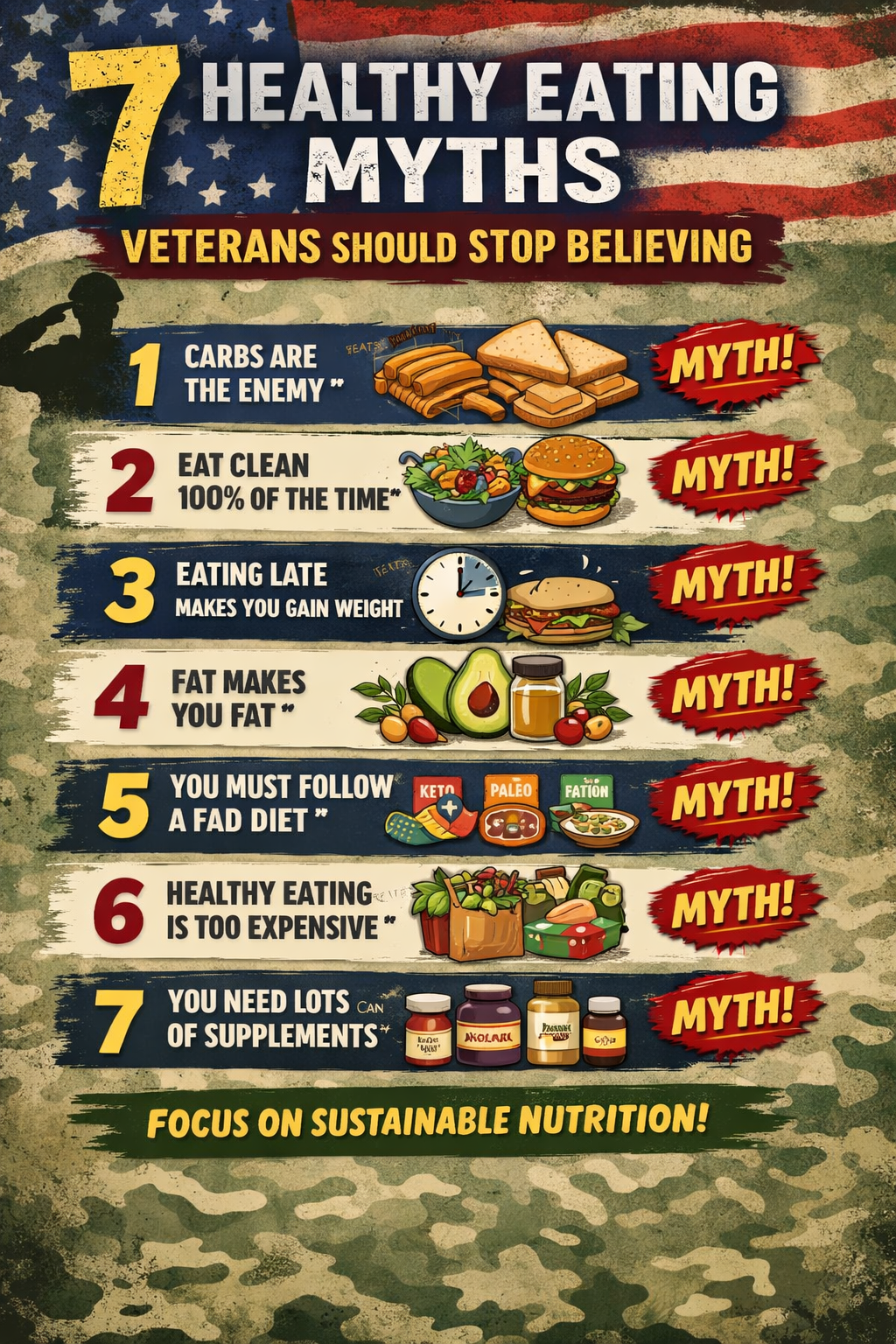
Fueling your body shouldn’t feel like navigating a minefield of conflicting advice. Yet many veterans fall into the trap of following outdated, oversimplified, or flat‑out incorrect nutrition rules. The truth is simple: your body, your mission, and your lifestyle require a personalized approach — not a one‑size‑fits‑all diet trend.
This guide breaks down seven of the most common healthy‑eating myths and replaces them with practical, sustainable truths that support performance, recovery, and long‑term health.


Myth #1: “Carbs Are the Enemy”
Carbs aren’t the problem — the type of carbs is what matters. Whole grains, fruits, vegetables, and legumes provide steady energy, fiber, and nutrients that support training and brain function.
The real enemy: ultra‑processed carbs that spike blood sugar and crash energy.
Truth: Quality carbs fuel endurance, mental clarity, and recovery — all essential for veterans rebuilding strength and stamina.
Myth #2: “You Need to Eat Clean 100% of the Time”
Perfection is a trap. Strict “clean eating” often leads to burnout, guilt, and binge‑restrict cycles.
Truth: Consistency beats perfection. Aim for mostly whole foods while allowing flexibility. A sustainable plan always outperforms a rigid one.
Myth #3: “Eating Late at Night Makes You Gain Weight”
Your body doesn’t have a clock that says, “It’s 8 PM — time to store fat.” Weight gain is about total intake and quality, not the hour on the clock.
Truth: If you’re hungry at night, especially after training, a balanced snack can actually improve sleep and recovery.
Myth #4: “Fat Makes You Fat”
Healthy fats — like those from salmon, nuts, seeds, olive oil, and avocados — support hormone balance, brain health, and joint function.
Truth: Fats are essential. Overeating anything causes weight gain, not fat alone.
Myth #5: “You Must Follow a Popular Diet to Be Healthy”
Keto, paleo, intermittent fasting, carnivore — the list goes on. These diets can work for some people, but none are universally superior.
Truth: The best diet is the one you can maintain long‑term, supports your goals, and fits your lifestyle as a veteran, parent, worker, or athlete.
Myth #6: “Healthy Eating Is Too Expensive”
It can be — but it doesn’t have to be. Frozen produce, bulk grains, canned beans, and simple proteins like eggs or chicken thighs are affordable and nutrient‑dense.
Truth: Smart shopping beats fancy superfoods every time.
Myth #7: “You Need Supplements to Be Healthy”
Supplements can help fill gaps, but they’re not the foundation. Many veterans overspend on powders and pills while neglecting real food.
Truth: Prioritize whole foods first. Use supplements only to support specific needs (vitamin D, omega‑3s, protein, etc.).
The Bottom Line
Healthy eating isn’t about following strict rules — it’s about understanding your body and building habits that support your mission. When you ditch the myths and focus on sustainable nutrition, you unlock better energy, sharper focus, improved recovery, and long‑term resilience.







Leave a Reply