
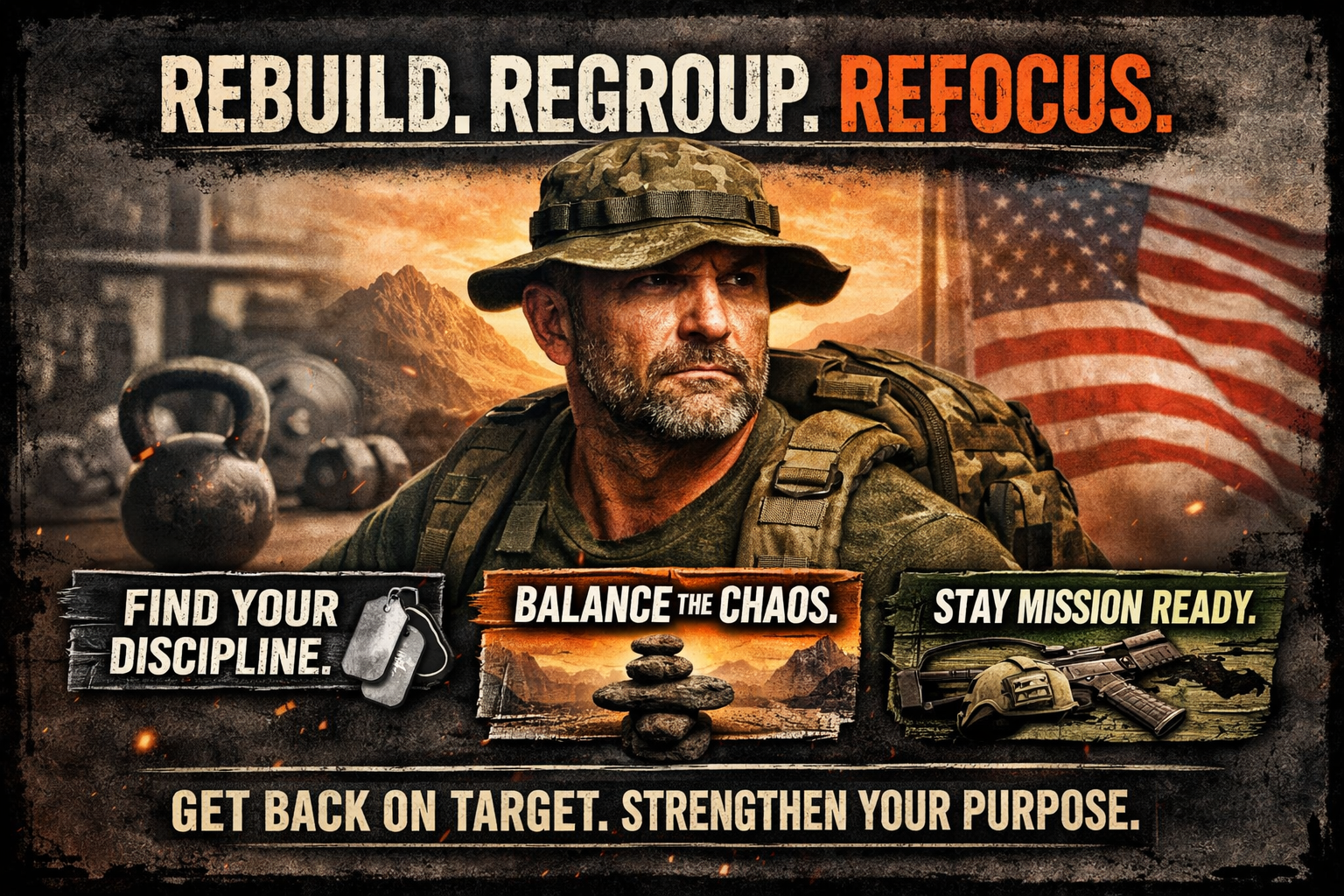
A weekly fitness series for veterans rebuilding strength, movement, and readiness
Why Mobility + Conditioning Matters for Veterans
Years of military service often leave veterans with:
- Tight hips and ankles from rucking
- Shoulder stiffness from gear and repetitive load
- Lower‑back pain from years of impact and uneven terrain
- Reduced cardiovascular endurance after transitioning to civilian life
- Difficulty performing daily tasks without discomfort
This workout restores movement quality first — then layers in conditioning that is joint‑friendly and scalable.

Warm-Up (5 Minutes)
Designed to open tight joints and prepare the body for movement.
- World’s Greatest Stretch (slow) — 1 minute
- Ankle Mobility Rocks — 1 minute
- Thoracic Spine Rotations (open book) — 1 minute
- Hip Flexor Stretch — 1 minute
- Marching in Place (light) — 1 minute
Main Workout (20–25 Minutes)
This session alternates mobility drills with low‑impact conditioning to build endurance without joint stress.
1. Mobility: Cat–Cow Flow
Time: 1 minute Why it helps: Loosens the spine, reduces back stiffness, improves breathing mechanics. Modification: Perform seated if kneeling is uncomfortable.
2. Conditioning: Low-Impact Step March
Time: 2 minutes Why it helps: Builds cardiovascular endurance without pounding the knees. Modification: March in place if steps are limited.
3. Mobility: 90/90 Hip Switches
Reps: 10 slow reps Why it helps: Improves hip rotation — critical for back pain reduction. Modification: Sit on a pillow or elevate hips.
4. Conditioning: Farmer Carry (Light Load)
Time: 30–45 seconds Why it helps: Builds grip, posture, and core stability. Modification: Use one weight for a suitcase carry.
5. Mobility: Shoulder Wall Slides
Reps: 10–12 Why it helps: Restores shoulder mobility and posture. Modification: Perform lying on the floor if standing is difficult.
6. Conditioning: Shadow Boxing (Low Impact)
Time: 1 minute Why it helps: Elevates heart rate, improves coordination, and feels good. Modification: Keep movements small and slow.
7. Mobility: Standing Hamstring Sweep
Reps: 10 per leg Why it helps: Loosens hamstrings without aggressive stretching. Modification: Reduce range of motion if back is tight.
Cool Down (5 Minutes)
- Deep Breathing (Box Breathing) — 1 minute
- Seated Forward Fold — 1 minute
- Quad Stretch — 30 seconds per side
- Neck Mobility (gentle circles) — 1 minute
Progression Chart
| Week | Mobility Duration | Conditioning Duration | Notes |
|---|---|---|---|
| 1 | 1 min per drill | 1–2 min intervals | Focus on smooth movement |
| 2 | 1–1.5 min per drill | 2–3 min intervals | Increase pace slightly |
| 3 | 2 min per drill | 3 min intervals | Add light weights to carries |
| 4 | 2 min per drill | 3–4 min intervals | Add one extra conditioning round |
Adaptive Options for Common Veteran Injuries
Knee Pain
- Replace step marching with marching in place
- Avoid deep knee bends
- Use supportive shoes or a soft surface
Lower Back Pain
- Keep mobility slow and controlled
- Avoid twisting during shadow boxing
- Add extra Cat–Cow rounds
Shoulder Limitations
- Keep punches low and slow
- Perform wall slides with reduced range
- Skip overhead movements entirely
Verified Resource Links
- VA Whole Health – Moving the Body Official VA guidance on safe movement, mobility, and pain‑free exercise. Whole Health Home
- VA Adaptive Sports & Events National programs supporting adaptive fitness and rehabilitation.
VA National Veterans Sports Programs - Team Red, White & Blue (Team RWB) Veteran fitness community with local events and weekly workouts. Team Red, White & Blue | Get Involved Today
- Adaptive Training Academy (ATA) Veteran‑founded organization specializing in adaptive and inclusive fitness. Adaptive Fitness Training | Adaptive Training Academy





Leave a Reply