
A Warrior’s Path to Harmony After War
The Warrior’s Mind Never Stops Moving
Even after the battlefield is gone, the mind keeps scanning. It checks exits. It reads faces. It tracks movement. It listens for tones, patterns, and shifts in the environment. This is not paranoia—it’s conditioning. It’s the survival instinct sharpened by training, repetition, and necessity.
Presence—the second pillar of Yoha Zen—is the discipline of returning the mind to the moment instead of letting it drift into threat‑scanning, memory loops, or imagined danger.
Presence is not relaxation. It is not passivity. It is not “just calm down.” Presence is a weapon—a tool that gives the warrior control over where the mind goes and how the body responds.
The Contrast Between Combat Alertness and Civilian Presence
Combat alertness is a state of constant readiness. It’s the ability to detect danger before it appears. It’s the instinct to react faster than thought. It’s the awareness that one mistake can cost lives.
Civilian presence is the opposite. It’s the ability to:
- sit without scanning
- listen without analyzing
- walk without checking corners
- rest without bracing
- trust without verifying
For many veterans, this contrast feels impossible to bridge. The body knows how to be alert. It doesn’t know how to be present.
Yoha Zen teaches that presence is not the absence of alertness—it is the control of alertness.
Why Presence Is Hard for Veterans
Presence is difficult because the mind has learned that danger can appear at any moment. Even years after service, the nervous system still behaves as if the battlefield is nearby.
Veterans often describe:
- feeling unsafe in safe places
- being unable to relax around strangers
- scanning crowds without meaning to
- reacting strongly to sudden noises
- feeling restless in quiet environments
- struggling to “turn off” the internal guard
These reactions are not irrational. They are learned. And what is learned can be retrained.
The Challenge of Trusting Safety Again
One of the deepest wounds of war is the loss of trust in safety. Not trust in people—trust in the idea of safety itself.
In combat, safety is an illusion. The moment you believe you’re safe is the moment you’re vulnerable. That belief becomes ingrained.
So when veterans come home and people say, “Relax, you’re safe now,” the body disagrees. The mind disagrees. The Echo disagrees.
Presence in Yoha Zen is the slow, disciplined process of teaching the body that safety is real again—not absolute, not guaranteed, but real enough to live in.
Presence as a Weapon
Presence is not about becoming soft. It is not about losing the warrior edge. It is about choosing when to be alert and when to be at ease.
Presence gives the warrior:
- control over reactions
- clarity in decision‑making
- the ability to rest
- the ability to connect
- the ability to live without constant tension
Presence is the weapon that turns survival mode into living mode.
A Veteran’s Reflection: The First Time Presence Made Sense
I remember sitting in a park one afternoon. Kids were playing. People were walking dogs. It was peaceful. But my mind wasn’t there. It was scanning, tracking, analyzing.
Then something shifted. I noticed the wind. I noticed the warmth of the sun. I noticed the sound of leaves. For a moment—just a moment—I was actually there.
It didn’t last long. But it was enough to show me what presence felt like. It was enough to show me that my mind could learn a new way of being.
Presence wasn’t about shutting off the warrior. It was about giving the warrior a place to rest.
Grounding Techniques in Yoha Zen
Yoha Zen uses grounding techniques not as therapy, but as discipline—tools to retrain the nervous system.
1. The Anchor Breath
A slow inhale, a controlled exhale—like the breath before squeezing a trigger. This breath tells the body: Not now. Not here.
2. Sensory Reset
Noticing five things you see, four you feel, three you hear, two you smell, one you taste. This pulls the mind out of the past and into the present.
3. The Weight Shift
Feeling your feet on the ground. Feeling gravity. Feeling the body’s weight. This reminds the nervous system that you are not in motion, not in danger.
4. The Hand Check
Touching something with texture—keys, fabric, a stone. This gives the mind a physical anchor.
5. The Name the Moment Practice
Saying quietly: “I am here.” Not “I’m fine.” Not “I’m safe.” Just “I am here.”
Presence begins with location, not emotion.
Presence and the Echo
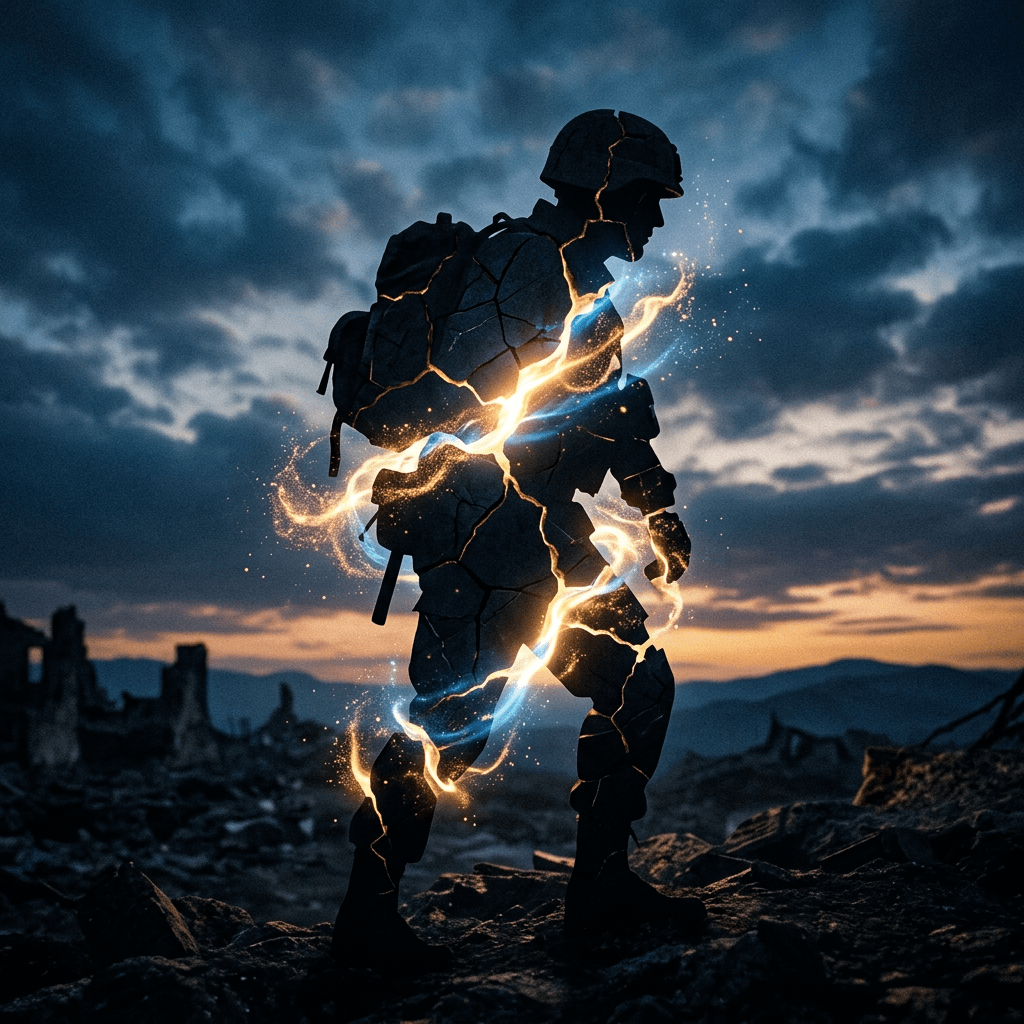
Presence is the counterbalance to the Echo. When the Echo rises—through memory, tension, or instinct—presence brings the mind back to the moment.
Presence does not silence the Echo. It puts it in context.
- “This is a memory.”
- “This is a reaction.”
- “This is my body remembering.”
- “This is not happening now.”
Presence is the bridge between the past and the present.
Presence and Identity
Presence helps veterans rebuild identity by grounding them in who they are now—not who they were in uniform, not who they were in combat, not who they were before service.
Presence says:
- “I am here.”
- “I am alive.”
- “I am becoming.”
Identity is not found in the past. It is found in the present.
Presence and Connection
One of the hardest parts of reintegration is reconnecting with people. Presence makes connection possible.
When the mind is in the past, connection is impossible. When the mind is in the future, connection is fragile. When the mind is in the moment, connection becomes real.
Presence allows veterans to:
- listen without analyzing
- speak without filtering
- feel without bracing
- trust without scanning
Presence is the foundation of relationships after war.
Presence and the Warrior’s Future
Presence is not the end of the warrior’s journey. It is the beginning of a new one. It is the skill that allows veterans to:
- rest
- heal
- grow
- rebuild
- find purpose
- live fully
Presence is the discipline that turns the aftermath into a path.
Looking Ahead
Post 5 will explore Harmony: The Third Pillar of Yoha Zen—how veterans integrate the warrior self with the civilian self, rebuild belonging, and learn to move through life without losing their edge or their peace.




 VeteranJaime
Leave a comment