
A Warrior’s Path to Harmony After War
Yoha Zen is built around the reality that the warrior’s greatest battles often begin after the shooting stops. It teaches that the “aftermath” (余波 yoha—the lingering waves) is not a curse but a terrain to be navigated with discipline, compassion, and presence.
The doctrine is organized into Four Books, each containing principles, practices, and teachings.
BOOK I — The Nature of the Aftermath (余波の性質)
1. The Echo Principle (残響の理)
War leaves echoes in the body, mind, and spirit. These echoes are not enemies; they are signals. Yoha Zen teaches that healing begins when the warrior stops fighting the echoes and starts listening to them.
2. The Law of Unnatural Experience (不自然体験の法)
Combat is not a normal human environment. PTSD is not weakness—it is the mind’s attempt to survive an environment it was never designed for.
3. The Truth of Dual Identity (二重身分の真理)
The warrior is forever changed. There is no “going back.” There is only integration—becoming whole with both the warrior and the civilian self.
BOOK II — The Three Pillars of Yoha Zen (三本柱)
1. Acceptance (受容)
Acceptance is not surrender. It is the courage to face the truth without distortion.
2. Presence (現在)
Presence is the warrior’s new battlefield. It is the discipline of returning to the moment instead of being dragged into the past.
3. Harmony (調和)
Harmony is not the absence of conflict. It is the ability to move through conflict without losing oneself.
BOOK III — The Five Practices (五つの修行)
1. Stillness After the Storm (静寂の稽古)
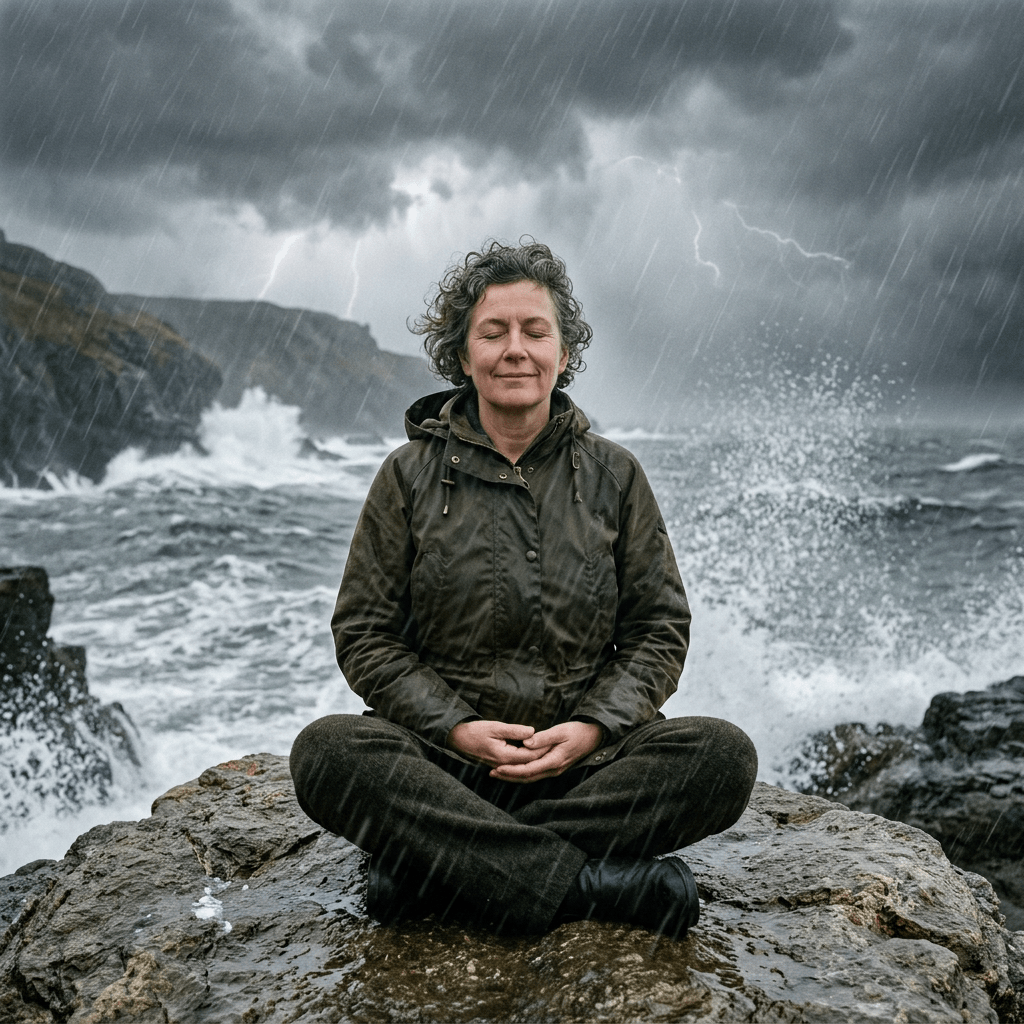
A daily ritual of silence. A moment to declare: I am here. I am safe.
2. The Breath of Return (帰息法)
A breathing discipline modeled after the calm exhale of a marksman. It teaches the body to return from alertness to peace.
3. The Journal of Echoes (余波録)
A structured reflection practice:
- What arose
- What triggered it
- How I responded
- What I learned
This transforms symptoms into teachers.
4. The Path of Service (奉仕の道)
Purpose is rediscovered through service. The warrior becomes a guardian of peace, not a participant in war.
5. The Discipline of the Body (身体の道)
Movement—kata, walking, martial arts—releases stored trauma and reconnects the warrior with strength.
BOOK IV — The Way of Integration (統合の道)
1. The Reforged Self (再鍛身)
The warrior is not broken—only unfinished. Integration is the forging of a new identity.
2. The Circle of Belonging (帰属の輪)
Healing requires community. Isolation is the battlefield where many warriors fall.
3. The Warrior of Peace (平和の武士)
The final stage of Yoha Zen: Strength without aggression. Presence without fear. Purpose without violence.






 VeteranJaime
Leave a comment